Search
Close this search box.

galaxy

Understanding Hong Kong Salaries Tax for Businesses
Understanding Hong Kong Salaries Tax for Businesses

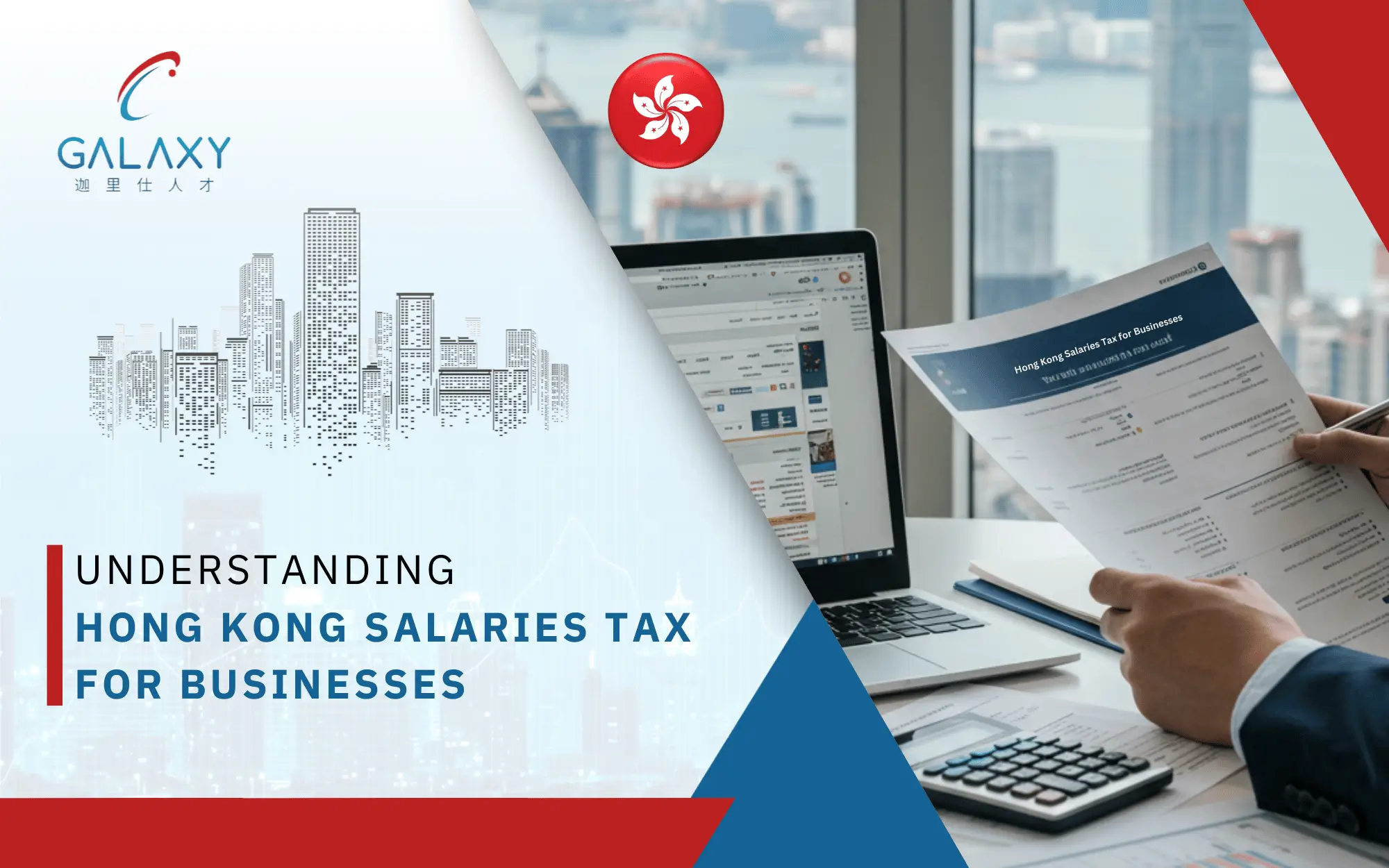
Business professional reviewing documents on Hong Kong salaries tax with laptop and calculator — Galaxy Corporate services

Hong Kong is recognised as one of Asia’s most efficient and transparent tax jurisdictions, offering a stable and business-friendly environment for international enterprises. Its straightforward framework is designed to foster growth, minimise administrative burden, and provide clarity for both employers and employees. For multinational organisations, particularly those managing expatriate assignments or cross-border payroll, understanding the salaries tax regime is critical to effective remuneration planning and workforce strategy.

Accurate and timely compliance is not only a legal obligation but also central to operational efficiency and corporate reputation. Missteps can result in penalties and unnecessary costs, while a well-informed approach—often supported by professional accounting & tax service providers—enables companies to optimise compensation packages and remain fully aligned with statutory requirements. This guide provides a detailed overview of Hong Kong’s salaries tax system, including assessment methods, applicable rates, taxable income categories, and key compliance considerations for international employers.

Why Hong Kong’s Tax System Appeals to Foreign Businesses?

Multinational corporations often establish operations in Asia, with Hong Kong a preferred choice due to its reputation as one of the region’s most stable and efficient tax jurisdictions. Its tax framework is built on clarity and predictability—qualities highly valued by international employers managing regional headquarters or overseeing cross-border payroll.

Territorial Taxation Model

  • Dividends, capital gains, and income derived from sources outside the country are exempt from taxes.
  • Tax liability is limited to income that arises in or is derived from Hong Kong.
  • For businesses with globally mobile employees, this strategy significantly lowers international tax exposure and streamlines administration.

Absence of Indirect Personal Taxes

  • There is no capital gains tax, estate duty, value-added tax (VAT), or general sales tax.
  • The resulting tax burden on individuals is limited and predictable.
  • Employers benefit from streamlined compensation planning and fewer compliance requirements.

Low and Competitive Tax Rates

  • The maximum salary tax rate is capped at 17%.
  • Individuals are assessed under both progressive and standard methods, with the Inland Revenue Department applying the calculation that results in the lower tax liability. 
  • This system enhances efficiency across a wide range of income levels.

Stable Legal and Regulatory Framework

  • Tax legislation in Hong Kong is consistent and rarely subject to sudden amendment. 
  • This predictability enables accurate payroll forecasting, long-term financial planning, and operational stability. 
  • Businesses are better positioned to manage risk and ensure continuity in workforce planning.

Efficient, Employer-Oriented Tax Administration

  • The Inland Revenue Department provides structured, digital processes for tax filings and documentation.
  • Employers are supported through clear guidance and procedural transparency.
  • The system includes automated selection of the most favourable tax computation method for the employee, reducing manual intervention.

Strategic Positioning for Regional Operations

  • Hong Kong’s tax framework supports organisations managing regional functions, including mobile teams and expatriate personnel.
  • It enables centralised payroll management and simplifies deployment across Asia-Pacific jurisdictions.

These elements collectively position Hong Kong as one of the most commercially advantageous tax environments for international business. Its well-defined legal structure and administrative efficiency provide the clarity required for strategic growth while supporting compliance and cost control across regional operations.

Overview of Salaries Tax in Hong Kong

In Hong Kong, wage taxation is linked to employment income, office work (including directorships), and pensions earned within the jurisdiction. The taxation is territorial, meaning that only income earned from services rendered in Hong Kong is subject to taxation. Employment income earned outside the jurisdiction is outside taxation, irrespective of whether the taxpayer is a tax resident or not. Territoriality forms the bedrock of Hong Kong as a world-class international business and taxation hub, making it a prime focus area for firms offering accounting & tax services to global businesses.

Categories of Taxable Income

The scope of salaries tax is comprehensive, covering various forms of remuneration and employment-related benefits. Income commonly subject to tax includes:

Salaries, Wages, and Bonuses

Regular pay, performance incentives, commissions, gratuities, and overtime payments fall within this category.

Cash and Non-Cash Benefits

Benefits such as housing, transport, education allowances, and other perks provided as part of the employment package are assessable.

Employer-Provided Housing or Housing Allowance

Where the employer or a housing allowance provides accommodation, a notional rental value is assessed and added to the employee’s taxable income.

Excess Contributions to Retirement Schemes

Employer contributions that exceed statutory limits under the Mandatory Provident Fund (MPF) or the Occupational Retirement Schemes Ordinance (ORSO) are considered taxable income.

Equity-Based Compensation

Share options and stock awards are taxed at the time of vesting or exercise, in accordance with the relevant provisions.

Key Exemptions and Administrative Rules

60-Day Rule

Employees who spend 60 days or fewer in Hong Kong during the assessment year are generally exempt from salaries tax. This exemption does not extend to directors or airline crew, who are taxed regardless of physical presence.

Director’s Fees

Fees paid to directors are taxable if the company is centrally managed or controlled from Hong Kong, regardless of whether the duties are carried out abroad.

Offshore Employment Relief

Employees with offshore employment arrangements may be eligible for partial exemption, depending on the number of days spent working outside Hong Kong. This requires substantiation through employment contracts, travel logs, and payroll records.

Employer Responsibilities

Employers in Hong Kong must ensure accurate classification of income, proper remuneration structuring, and full compliance with tax reporting requirements. Penalties, a reevaluation of tax obligations, or damage to one’s reputation may result from incorrect income classification or failure to maintain proper records.

To meet regulatory standards, it is essential to maintain clearly drafted employment contracts, ensure consistency in payroll processing, and accurately report all forms of employee compensation. Adhering to these requirements supports compliance with the Inland Revenue Department and helps maintain operational and reputational integrity in a competitive business environment.

How Are Salaries Tax Calculated and Applied in Hong Kong for 2025/26?

In Hong Kong, there are two methods for calculating salary tax, and each technique is used in every instance. After calculating the liability under each method, the Inland Revenue Department (IRD) selects the one that results in the lowest tax amount. The purpose of this dual-method structure is to expedite the administrative process and guarantee equity across income levels.

1. Progressive Rate Assessment

This method is based on an individual’s Net Chargeable Income, which is calculated as:

Total Employment Income − Allowable Deductions − Personal Allowances

According to Gov.hk, the official website of the Hong Kong government, the applicable progressive tax bands for the 2025/26 year are as follows:

Net Chargeable Income (HKD)Tax Rate
First 50,0002%
Next 50,0006%
Next 50,00010%
Next 50,00014%
Remainder17%

Our quick guide on : Effective Taxation & Tax Planning Strategies for Businesses in Hong Kong

This method typically benefits individuals who qualify for multiple deductions and personal allowances.

2. Standard Rate Assessment

The standard rate applies to Net Assessable Income, calculated as:

Total Employment Income − Allowable Deductions

Under this method, personal allowances are not deducted. The flat tax rates, as stated by Gov.hk, are as follows:

  • 15% on the first HKD 5 million of net assessable income
  • 16% on any amount exceeding HKD 5 million

This calculation method often applies to high-income earners whose available deductions and allowances are minimal.

Practical Illustration of Tax Calculation

Referencing the official tax guide issued by the IRD, consider an individual earning HKD 800,000 per annum, with allowable deductions of HKD 100,000 and personal allowances amounting to HKD 132,000.

Progressive Rate Method:

Net Chargeable Income = 800,000 − 100,000 − 132,000 = HKD 568,000
The tax would be calculated as follows:

  • First 50,000 @ 2% = 1,000
  • Next 50,000 @ 6% = 3,000
  • Next 50,000 @ 10% = 5,000
  • Next 50,000 @ 14% = 7,000
  • Remaining 368,000 @ 17% = 62,560
    Total Tax = HKD 78,560

Standard Rate Method:

Net Assessable Income = 800,000 − 100,000 = HKD 700,000
Tax at 15% = HKD 105,000

In this scenario, the progressive rate method results in a lower tax liability and would therefore be applied.

Considerations for Employers

For employers managing local or regional payroll in Hong Kong, it is essential to understand how these tax calculations impact net salary, benefits structuring, and total compensation costs. Proper classification of income and adequate documentation of deductions ensure accurate assessment and compliance with local tax laws.
Engaging reliable tax and accounting services or consulting with a specialised tax and accounting firm can support accurate payroll processing and align operations with the current framework for tax compliance in Hong Kong. This is particularly important for multinational organisations that manage employee assignments across borders or offer equity-based compensation.

What Allowances and Deductions Apply Under Salaries Tax in Hong Kong?

To reduce the tax burden on its residents, Hong Kong’s tax system offers several exemptions and deductions. Employees who have dependents, housing expenses, retirement costs, and educational expenses all benefit from them.

As per the Inland Revenue Department (IRD) in its official reports, i.e., the Personal Allowances Table and Taxpayer Pamphlets, the following reliefs are available in the year of assessment 2025/26:

Personal Allowances (2025/26)

Allowance TypeAmount (HKD)
Basic Allowance132,000
Married Person’s Allowance264,000
Child Allowance (per child)130,000 / 260,000 (year of birth)
Dependent Parent (aged 60+)100,000 (co-residing) / 50,000 (not)
Disabled Dependant Allowance75,000
Single Parent Allowance132,000


These allowances serve to recognise familial responsibilities and provide financial relief to taxpayers supporting immediate or extended family members.

Deductible Expenses

Apart from allowances, individuals are also permitted to claim deductions for specific types of expenses incurred during the tax year. The highest amounts deductible in 2025/26 are:

Deduction TypeMaximum Deduction (HKD)
Home Loan Interest100,000 – 120,000
Elderly Residential Care Expenses100,000
Self-Education Expenses100,000
Mandatory Provident Fund (MPF)18,000
Voluntary MPF / Deferred AnnuitiesUp to 60,000 (combined)
Domestic Rent100,000 – 120,000
Assisted Reproductive Treatment100,000

All deduction claims must be substantiated with appropriate documentation, such as tenancy agreements, medical receipts, proof of tuition fees, or official MPF contribution statements.

For employers, particularly those managing payroll obligations for diverse employee profiles, it is essential to remain current with the latest IRD guidance. Integrating applicable allowances and deductions into salary structuring ensures complete alignment with local regulations and supports effective tax compliance in Hong Kong.

What Should Multinational Employers Know About Salaries Tax Compliance in Hong Kong?

To ensure full compliance with tax law in Hong Kong, multinational employers need to adopt the following best practices:

1. One must ensure the source of income.

Taxability will be based on where the employment contract is performed, where compensation is paid, and the employer’s principal place of business.

2. Use the 60-Day Exemption.

Workers physically on duty in Hong Kong for no more than 60 days in a year can be exempted. Proper travel records are required.

3. Properly State Director’s Fees

Director’s fees are tax-deductible if the company is centrally controlled in Hong Kong, even if duties are exercised elsewhere.

4. Provide Equity Compensation

Stock awards and stock options are taxed when they vest or when they are exercised. They must be valued appropriately and reported.

5. Keep Documentation

Employees are reminded to keep supporting documents for deductions and allowances, such as lease contracts, MPF statements, and receipts.

6. Track Budget Adjustments

Yearly budgetary adjustments can impact tax bands, allowances, or introduce reliefs. Keeping abreast allows for genuine payroll planning.

Hiring the services of a professional tax and accounting company, or procuring reliable tax and accounting services, is key to ensuring compliance, avoiding risks, and keeping pace with the changing Hong Kong payroll requirements.

Employer Benefits and Their Tax Treatment

All types of compensation or rewards you receive through your job are generally subject to personal income tax.

These earnings provide benefits to an individual as part of their employment. Below are some typical examples of taxable benefits:

  • Housing and housing-related allowances
  • Meal allowances
  • Education assistance for dependent children
  • Company-provided car
  • Vacation travel allowances
  • Stock incentives and stock options

Keep in mind that some non-cash benefits may be taxed depending on the specific calculation methods. However, this guide does not cover the detailed procedures for such calculations.

Conclusion

Hong Kong has one of the best-articulated and most beneficial tax regimes in the Asia-Pacific. The imposition of salary tax liabilities, however, requires careful operation and comprehensive knowledge of prevailing regulatory conditions. This includes the proper determination of income classification, the accurate application of deductions, and strict compliance with annual legislative changes.

For international businesses managing regional payrolls or expatriate workforces, the complexity of cross-border compliance requires more than internal oversight. It calls for experienced, jurisdiction-specific support.

Galaxy Payroll Group offers integrated payroll, taxation, and compliance solutions designed for companies operating in Hong Kong and across the region. With established local expertise and a practical understanding of tax administration, Galaxy ensures employers remain compliant, well-prepared, and free to focus on their core business objectives.

Streamline Your Hong Kong Payroll Strategy

Avoid penalties and streamline operations with local expertise in salaries tax and employer obligations.

FAQ’S

What income is subject to salaries tax in Hong Kong?

Salaries tax applies to income earned from employment, office (such as directorships), and pensions arising in or derived from Hong Kong. Foreign-sourced income is not taxable.

Salaries Tax rates in Hong Kong are calculated under two methods, with the lower amount applied:

  • Progressive rates up to 17% on net chargeable income
  • Standard rates of 15% (up to HKD 5 million) and 16% (above HKD 5 million)


Individuals present in Hong Kong for 60 days or less during the tax year may be exempt, unless they are company directors or members of the airline crew.

Taxpayers may claim allowances for dependents, housing, and education, as well as deductions for home loan interest, MPF contributions, voluntary annuities, and domestic rent.

Yes. A tax credit may be claimed for foreign income taxed in jurisdictions with which Hong Kong has a double tax treaty, provided that proper documentation is submitted.


China Global Payroll and Tax Information Guide

China Global Payroll and Tax Information Guide

Business team discussing global payroll and tax strategy with China highlighted on world map presentation.

China remains the world’s largest and most dynamic labour market, attracting both multinational corporations and fast-growing SMEs. Payroll management here is far more than wage disbursement; it requires navigating complex labour laws, multi-tiered tax systems, and human resource practices that differ across provinces and industries. 

In 2025, rising labour costs, stricter compliance requirements, and the growing use of digital technologies in finance and HR will make payroll management even more demanding, requiring businesses to balance regulatory precision with operational efficiency while respecting local workplace culture.

For companies establishing local entities or managing cross-border teams, accurate and compliant payroll is critical to efficiency, employee trust, and sustainable growth. This guide outlines the essentials of payroll in China, including updates on the minimum wage, employee benefits, tax compliance, cross-border payroll solutions, and the development of a resilient and scalable payroll framework.

What Are the Core Components of Payroll in China?

China’s payroll system is built on numerous compulsory elements that all employers must handle with precision and timeliness to avoid non-compliance and to gain workers’ trust. They are not just statutory requirements; they form the pillar of fair and open employment policies.

  • Individual Income Tax (IIT)

Applied with progressive rates of taxation, income levels, deductibility, and exempt amounts are periodically revised by the authorities. Employers are required to correctly compute and deposit on time to avoid penalties and remain in compliance.

  • Mandatory Employer Contributions

Social insurance contributions for pension, unemployment, medical, maternity, and work-injury insurance. The schemes are designed to serve employee interests and are an integral part of China’s labour system.

  • Housing Fund

A compulsory saving plan contributed to by employers and employees in equal amounts, used for employees to purchase housing. Differing rates in various cities necessitate knowledge of local regulations.

  • Allowances and Bonuses

Transport allowances, meal allowances, and annual bonuses are standard, but must be disclosed as taxable income. The structuring of rewards must be done with care to ensure maximum staff satisfaction and tax efficiency.

Since each of these variables is regulated both nationally and provincially, payroll procedures must be tailored to the particular province or municipality in which its employees are located. For global employers operating in multiple jurisdictions, complexity is even more daunting, making a well-researched and locally compliant payroll strategy essential.

What Should You Know About Core Minimum Wage in China 2025?

China’s 2025 minimum wage remains region-based, with locally set rates that correspond to local living expenses and economic conditions. Tier-1 cities have the highest rates, and other towns continuously adjust their rates to remain competitive. Employers feel the effects of these payroll budget adjustments, overtime rates, and benefits planning—so regular monitoring is imperative for compliance and a strong employer reputation.

CategoryKey Insight
Decentralised Wage SettingChina’s minimum wages are set locally—by province, city, or district—so that local living costs and economic conditions can be accommodated.
2025 Wage RangeThe lowest monthly wages range from RMB 1,690 to RMB 2,690 (approximately USD 235–370), indicating significant regional disparities.
Most Regions Above RMB 2,000By mid-2025, almost all the regions will have top-level minimum wages above RMB 2,000, suggesting a general increase in labour costs.
Lowest Wage RegionsSeveral areas made adjustments to their pay scales in the first half of 2025, demonstrating a proactive approach to balancing rewards with changing market circumstances.
Frequent Annual AdjustmentsTo employers, these variations have immediate effects on payroll budgets, overtime compensation, and talent management—rendering local regulatory knowledge critical.
Business ImpactFor employers, these differences directly influence payroll budgets, overtime rates, and talent planning—making local compliance expertise essential.

Our quick guide on : Minimum Wage Trends in 2025 : A Comprehensive Global Overview

Employee Benefits Management in China: Key Insights for Employers

Employee benefits management in China is both a compliance necessity and a key talent retention strategy. Companies must strike a balance between the benefits of compliance and competitive advantages to attract and retain top talent.

1. Statutory Benefits:

China’s legal system requires inputs to:

  • Five Social Insurances – Pension, Medical, Unemployment, Work Injury, Maternity

  • Housing Provident Fund – For employees’ housing needs

Note: Regional contribution rates and calculation methods differ and are revised annually.

2. Extra Advantages:

Most employers exceed the law by providing:

  • Private health insurance
  • Transportation allowances
  • Subsidised meals
  • Regular health screenings.
  • Professional development programs

3. Best Practices for Employers:

  • Stay up to date with national and state laws

  • Integrate payroll systems to provide accurate and timely contributions.

  • Balance compliance with appeal by offering benefits that reflect market expectations

Why it matters:

A well-designed benefits strategy will enhance employees’ satisfaction, foster loyalty, and facilitate smooth operations—essential for both domestic and multinational corporations in China.

What Are the Key Rules for Employers on Tax in China?

Corporate Income Tax (CIT):

  • The standard rate is 25%.

  • Reduced rates are available for eligible High and New Technology Enterprises (HNTEs) and Small and Low-Profit Enterprises (SLPEs), typically at a rate of 15% or lower.

  • Qualification depends on strict adherence to and accurate reporting of standards.


Individual Income Tax (IIT):

  • Employers must calculate and withhold IIT on a monthly basis.

  • Tax rates range from 3% to 45% based on income.

  • Annual reconciliation is required for high earners.

  • The tax treatment for foreign employees is based on their residency status and the length of their stay.


Taxable Benefits:

  • Non-salary perks such as housing, education, and transport may be partially or fully taxable.

  • Certain expatriate benefits may be exempt if properly structured and supported with documentation.

  • Inaccurate reporting can result in fines and compliance risks.


Withholding Tax on Cross-Border Payments:

  • Royalties, dividends, and service payments to overseas entities are subject to withholding tax, typically ranging from 10% to 20%.

  • Tax treaty relief may be available if the correct documentation is submitted, including proof of tax residency.


Recordkeeping and Audits:

  • Employers must retain tax and payroll records for a minimum of 10 years.

  • All filings must be processed through China’s Golden Tax System.

  • Compliance includes maintaining Mandarin-language contracts and valid fapiaos.

  • Companies should be prepared for audits by local tax authorities.

Note: Maintaining full compliance with China’s tax laws is crucial for ensuring operational continuity, protecting reputation, and maintaining financial accuracy. Local expertise is highly recommended for effectively managing these obligations.

How Does Tax Compliance in China Affect Payroll Management?

Payroll and tax management in China demands coordinated oversight across regulatory compliance, cross-border payroll execution, and international tax planning. Each function carries distinct legal obligations and operational considerations. The table below outlines key focus areas businesses must address to ensure full compliance, maintain efficiency, and support sustainable growth in the Chinese market:

Compliance Focus Tax Compliance Cross-Border Payroll International Tax Strategy
Regulatory Filings Monthly IIT and statutory contributions must be filed accurately and on time Salary payments in RMB and foreign currencies require adherence to foreign exchange controls Entity type (WFOE, JV, Rep Office) determines tax obligations and reporting
Documentation Standards Payroll records must be complete, traceable, and audit-ready Documentation required for foreign staff exemptions and treaty benefits Treaty applications demand residency proof and supporting documents
Tax Invoicing Compliant fapiaos must be issued through the Golden Tax System Applicable to reimbursement and benefits paid to cross-border staff Withholding tax rates may be reduced through proper treaty use
Digital Integration Adoption of e-fapiao enhances reporting efficiency but increases scrutiny Digital payroll systems must handle multi-currency compliance Integration with global systems supports transparency and consistency
Risk Exposure Non-compliance may lead to fines, audits, and reputational harm Double taxation risks affect both the employer and employees if not mitigated Poor tax structuring increases cost and compliance burden
Optimisation Measures Regular updates to payroll processes and reporting tools Partnering with global payroll providers or local compliance firms ensures alignment Tax incentives for R&D and high-tech entities reduce overall liability

Together, these functions form the backbone of a compliant and scalable payroll and tax framework in China. For multinational companies, success depends on maintaining accuracy at the local level while integrating these processes with global governance standards. Engaging trusted in-country advisors or regional payroll partners ensures continuity, reduces compliance risk, and enables confident expansion in one of Asia’s most regulated business environments.


How Do International HR Services and Employer of Record (EOR) Services Work in China?

International HR services, particularly Employer of Record (EOR) solutions in china, are becoming the go-to model for foreign businesses entering China without setting up a local entity.

  • An EOR legally employs staff on your behalf, handling:
    Employment contracts compliant with Chinese labour laws.

  • Payroll processing, tax withholding, and social security payments.

  • HR administration, onboarding, and benefits management.

This model reduces entry barriers, speeds up hiring, and keeps you compliant without investing in a full legal presence.


What Are the Best Onboarding Solutions for Cross-Border Payroll in China?

Onboarding cross-border teams in China requires more than administrative setup—it sets the foundation for legal compliance, operational alignment, and long-term retention. For multinational companies, getting this right is critical to establishing credibility and building an integrated workforce.

1. Visa and Work Permit Processing

Securing the correct documentation for expatriates is the first non-negotiable step. Employers must ensure:

  • Visa applications are complete and submitted in line with regional immigration requirements

  • Work permits, especially Z-visas, match the employee’s job classification.

  • Renewals and residence registrations are managed without lapse.

Any delays or errors at this stage can result in non-compliance, delayed start dates, and reputational risk for the employer.

2. Compliance and Policy Induction

New employees must understand the regulatory framework from the outset. An effective compliance induction includes:

  • A clear overview of employment rights, entitlements, and contractual obligations
  • An explanation of payroll structure, including Individual Income Tax (IIT) and social insurance contributions
  • Familiarisation with internal HR policies, workplace systems, and reporting lines

Providing this clarity early improves transparency and reduces the likelihood of future disputes.

3. Cultural and Organisational Integration

For foreign hires, adjusting to local business practices can be challenging. To support cultural onboarding, employers should offer:

  • Guidance on workplace etiquette and communication norms
  • Insights into management styles and team dynamics
  • Basic language or key terminology support where needed

This reduces friction and enables faster integration into cross-functional teams.

4. Digital Onboarding Platforms

Digital solutions have become essential in managing distributed teams. A strong platform should provide:

  • Centralised access to documentation and digital signatures
  • Automated workflows for compliance tasks and induction modules
  • Built-in audit trails and regulatory checks

Well-designed digital systems improve consistency, reduce administrative workload, and ensure compliance across multiple jurisdictions.

For employers operating cross-border payroll in China, onboarding is not simply about filling forms—it is a strategic process that reinforces compliance, fosters inclusion, and lays the groundwork for effective operations. Companies that invest in structured, locally informed onboarding reduce attrition, earn employee trust, and strengthen their workforce from day one.

Conclusion

As China’s regulatory environment evolves, payroll has become a vital part of corporate governance rather than a simple back-office task. Beyond processing, companies must address minimum wage rules, taxation, employee benefits, and cross-border complexities.

Long-term success requires:

  • Regulatory alignment: Staying compliant with tax, social contributions, and regional wage laws.

  • Scalable systems: Using global payroll and digital HR platforms for accuracy and transparency.

  • Local expertise: Leveraging tailored HR and onboarding solutions for compliance and workforce integration.


Galaxy Payroll Group helps multinational businesses build future-ready payroll strategies through fully managed, compliant services. From international tax planning and employee onboarding to benefits and cross-border payroll, we ensure seamless operations throughout the APAC region.

Need Support Navigating Payroll in China?

Partner with Galaxy APAC for fully compliant, end-to-end payroll and tax solutions.

FAQ’S

What are the core payroll obligations for employers in China?

Employers in China must process employee salaries in compliance with local law, which includes accurate Individual Income Tax (IIT) withholding, mandatory contributions to social insurance and the housing fund, and adherence to regional payroll reporting standards.

Minimum wage rates in China are set at the provincial or municipal level and adjusted based on local cost-of-living benchmarks. Businesses must stay informed about these changes to ensure they maintain lawful compensation practices across multiple locations.

In most cities, foreign nationals are subject to the same social insurance obligations as domestic employees. However, exemptions may apply if a bilateral agreement exists between China and the employee’s home country, and proper documentation is provided.

Failure to meet payroll or tax obligations can lead to administrative penalties, legal liabilities, delayed employee payments, and reputational damage. With increased regulatory scrutiny, accurate reporting and timely submissions are essential.

Cross-border onboarding requires attention to immigration procedures, compliance briefings, cultural integration, and the use of secure digital platforms. A structured, locally informed approach ensures alignment with legal standards and supports long-term workforce integration.

11 Ways of Managing a Global Team Successfully

11 Ways of Managing a Global Team Successfully

Business team meeting with global map and clocks in background, alongside text ‘11 Ways of Managing a Global Team Successfully.

In today’s global economy, the workplace extends well beyond traditional boundaries. Organisations operate across time zones, legal systems, and cultures, enabling access to global talent while introducing complex managerial challenges. Leading cross-border teams requires more than conventional leadership; it calls for regulatory fluency, operational discipline, and cultural intelligence.

This article outlines eleven proven strategies for managing multinational teams, designed to enhance efficiency, promote cohesion, and unlock the full potential of a diverse, globally dispersed workforce.

Get our quick guide on: How Workforce Expansion Efficiencies Are Able to Help Companies Drive Business Growth

The Strategic Importance of Workforce Management for Global Teams

Workforce management is a critical global business imperative that requires aligning people, processes, and policies across diverse countries, cultures, and regulatory frameworks. It goes far beyond administration, addressing complex issues such as labour law compliance, payroll, and benefits, while enabling organisations to achieve both operational excellence and regulatory certainty.

Employer of Record (EOR) solutions are central to this approach, allowing companies to manage cross-border teams without establishing local entities. By handling compliance, contracts, tax obligations, and administration, EORs reduce risk and free organisations to focus on strategic goals. At the same time, consistent policies and equitable treatment foster employee trust, strengthen retention, and enhance long-term organisational resilience.

Key Organisational Benefits of a Well-Managed Global Team

Effective management of a global team can be a game-changer for businesses. It means the ease of doing business, faster decision-making, and a sense of connectivity despite geographical distance. The staff is highly energised and motivated, which maximises connectivity and provides better outcomes.

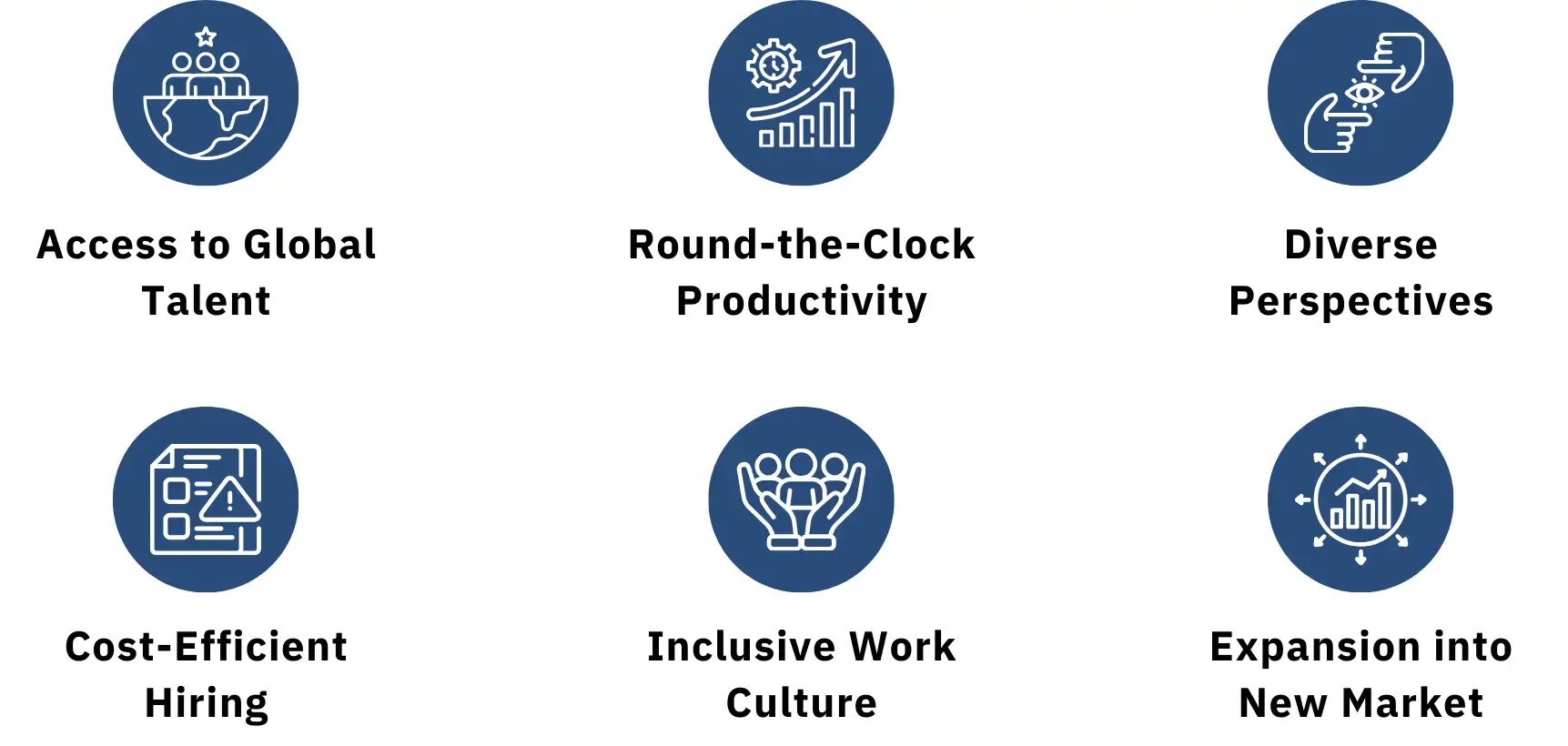
Icons showing benefits of global teams: talent, productivity, diversity, cost, inclusion, and expansion.

An effective global team results in innovation, encourages innovative problem-solving, and enables organisations to react promptly to changing market trends. It fosters a strong and cohesive culture through team participation, positioning the business strategically for sustainable success and long-term growth.

11 Proven Approaches to Managing a Global Team with Employer of Record (EOR) Expertise

With the growth of companies across borders comes the management of a global labour force that necessitates more than operational management—it calls for precision in compliance, workforce agility, and cultural fit. EOR solutions offer exceptional value in facilitating cross-border hiring, reducing employment risk, and providing market access without the need to set up in-country entities.

Here are 11 proven strategies to manage global teams effectively, with EOR services acting as a strategic enabler for compliance, speed, and scalability:

1. Streamline Onboarding with EOR Expertise

Smooth onboarding is vital to employee engagement and productivity. With Employer of Record (EOR) services, businesses can:

  • Ensure compliant contracts, benefits enrolment, and statutory payroll are handled locally and accurately.
  • Accelerate new hire integration by removing delays caused by legal complexities or document errors.
  • Shift focus from administrative tasks to strategic talent development from day one.
  • Reinforce a professional, compliant image of your brand to international hires.

EOR services reduce risk during onboarding while enhancing employee confidence and clarity from the start.

2. Build a Global Communication Infrastructure

Managing a global team across time zones and cultures requires consistent, accessible communication.

  • Establish dedicated channels for daily operations, feedback loops, and cross-functional collaboration to facilitate seamless communication and effective teamwork.
  • Encourage asynchronous updates to accommodate regional working hours.
  • Regular communication builds transparency, accountability, and a shared understanding of priorities.

EOR providers can help facilitate internal messaging tailored to local cultures and employment expectations.

3. Align Global Teams Around Shared Goals and KPIs

Clear objectives and measurable KPIs are essential for maintaining alignment and accountability across global teams.

  • Define performance metrics that align with overall business strategy and regional priorities.
  • Track individual and team progress transparently through structured reporting systems.
  • Use collaborative tools to maintain visibility, streamline updates, and drive accountability.

This approach ensures every team member remains focused on outcomes that support sustainable global growth.

4. Prioritise Cultural Awareness and Local Inclusion

Cultural sensitivity fosters engagement and reduces the risk of miscommunication.

  • Respect local holidays, norms, and customs when scheduling and recognising events.
  • Build inclusive decision-making frameworks that elevate diverse perspectives.
  • Offer language flexibility, localised benefits, and regional leadership opportunities.

EOR services enhance localisation efforts by supporting region-specific HR practices without requiring legal setup in each country.

5. Build Trust in Remote and Hybrid Teams

In global environments where teams rarely meet in person, trust becomes a key driver of performance.

  • Recognise achievements across all levels with region-appropriate methods.
  • Foster psychological safety by encouraging open feedback and transparent updates.
  • Trust leads to faster decision-making, lower turnover, and stronger collaboration.

By ensuring seamless payroll, statutory compliance, and reliable employee support, EOR services reinforce trust at every touchpoint.

6. Select Integrated Digital Collaboration Tools

Digital tools bridge the operational gap between remote teams—if implemented thoughtfully.

  • Invest in platforms that support file-sharing, video conferencing, task management, and HR documentation.
  • Ensure tools integrate well with your existing HR and finance systems.
  • Regularly audit tool usage to improve adoption and eliminate inefficiencies.

Efficient workforce management depends on technology that enhances—not complicates—day-to-day collaboration.

7. Coordinate Time Zones and Workflows Intelligently

Without careful coordination, time zone differences can disrupt productivity.

  • Structure overlapping hours for cross-functional teams.
  • Use shared calendars and global scheduling tools to avoid missed connections.
  • Rotate meeting times to ensure fairness and maintain engagement.

EOR partners can help align local working hours and public holiday calendars with company-wide workflows.

8. Ensure Employer Compliance Across Jurisdictions

One of the most complex aspects of global employment is adhering to local employer compliance regulations.

  • Every country has its own rules for minimum wage, benefits, leave, termination, and taxation.
  • Non-compliance can result in financial penalties, damage to the brand, and employee dissatisfaction.
  • Employer of Record services act as the legal employer on your behalf—managing contracts, payroll, tax filings, and local obligations.

This eliminates the need to set up separate entities in each country while maintaining full compliance.

9. Recognise Talent and Tailor Motivation Strategies

Recognition builds loyalty and drives productivity when executed with precision.

  • Offer a mix of public acknowledgement, personalised feedback, and tangible incentives.
  • Tailor recognition programs to reflect cultural nuances and individual preferences.
  • Link career development to recognition to retain top talent in competitive markets.

Global reward systems can be easily aligned with EOR services, enabling accurate and timely administration across borders.

10. Lead with Empathy Backed by Operational Clarity

Empathetic leadership increases resilience, especially in multicultural teams.

  • Understand employee concerns around remote work, relocation, or family responsibilities.
  • Combine empathy with data-driven clarity to avoid ambiguity and inefficiency.
  • Document expectations clearly, provide regular feedback, and maintain accessibility.

EOR providers offer regional HR support, helping businesses address local issues with both compliance and care.

11. Adapt Processes to Evolving Workforce Needs

Global business environments shift quickly. Static processes rapidly become obsolete.

  • Conduct regular audits of your global team operations.
  • Use feedback loops to identify inefficiencies in talent onboarding, workflow design, or benefits delivery.
  • Be proactive in updating systems, tools, and policies in line with market conditions.

With the support of workforce management specialists and EOR services, your business remains agile and ready to scale.

Bonus Insight: Simplify Work Permit and Visa Services

Expanding internationally often requires hiring talent across borders, making work permit and visa services an essential part of your hiring toolkit.

  • EOR partners often assist with or advise on visa sponsorships, documentation, and legal pathways to employ foreign talent.
  • Avoid delays and costly errors by relying on compliant visa handling and employment structuring.
  • This enables companies to recruit the best talent—regardless of location—while adhering to legal limits.

conclusion

The global workforce management is more than a simple coordination function; it requires a comprehensive understanding of local laws, local cultural differences, and operational effectiveness. Companies need to adopt effective workforce management practices that safeguard against non-compliance, facilitate efficient onboarding, and support effective teamwork at the team level. When all these elements come together, companies can maintain flexibility, empower employees, and build consistent performance while managing operational risks.

Galaxy Group specialises in turning these complexities into opportunities. Through its Employer of Record (EOR) solutions, as well as handling payroll, compliance, work permits, visas, and other services, Galaxy helps enterprises gain quick and convenient access to foreign markets. With regional knowledge, easy solutions, and a tested platform, the company helps enterprises unleash the full potential of their multi-country employee population to achieve growth, productivity, and long-term profitability.

Expand Your Global Team with Confidence

Hiring overseas shouldn’t come with unnecessary complications. Our EOR solutions take care of local compliance, contracts, and payroll—so you can focus on building a strong, global team.

FAQ’S

What is an Employer of Record (EOR) and how can it help manage a global team?

An EOR handles contracts, payroll, benefits, and compliance, making it easy to hire and manage employees across countries.

Local labour laws and taxes vary. An EOR ensures all legal requirements are met, reducing risk and complexity.

Utilise regular check-ins, collaboration tools, and clear guidelines while respecting different time zones to maintain alignment.

Recognise achievements, provide feedback, and foster inclusivity so employees feel valued and connected.

Managing compliance, payroll, time zones, and cultural differences can be a significant challenge. EOR services simplify these tasks, letting teams focus on growth.

Guide to Payroll in Taiwan

Guide to Payroll in Taiwan

Business professional reviewing payroll documents in Taiwan office with national flag and Taipei 101 in background.

For international companies operating in Taiwan, payroll is a critical intersection of compliance, culture, and employee trust. It goes far beyond salary processing, requiring strict adherence to labour laws, precise tax reporting, and timely social security contributions. Effective payroll management not only fulfils regulatory obligations but also strengthens organisational credibility and workforce engagement.

Taiwan’s strong economy, highly educated talent pool, and strategic position in Asia make it an appealing hub for expansion. Yet, navigating its payroll framework without local expertise risks compliance breaches, unexpected costs, and diminished employee morale. This guide examines the strategic role of payroll in Taiwan , highlighting key compliance requirements, wage benchmarks, remote work considerations, and how to select the right payroll partner for a scalable, legally sound framework.

How Does Taiwan Payroll Strengthen Global Competitiveness?

Taiwan has evolved far beyond its reputation as a manufacturing powerhouse. Over the past decade, it has transformed into an innovation-driven economy with thriving technology, financial services, healthcare, and creative sectors. For businesses entering or expanding in Taiwan, managing payroll involves tasks that extend beyond administrative responsibilities. It plays a crucial role in keeping employees happy, staying compliant with the law, and supporting business growth.

When payroll is done well, it can give companies a competitive edge—making it easier to attract top talent, comply with regulations smoothly, and expand operations with confidence. Here’s why it matters:

1. Attracting and Retaining Top Talent

  • Professionals in Taiwan’s competitive industries, such as advanced engineering, R&D, and semiconductor manufacturing, demand more than just attractive compensation; they place a premium on timely, accurate, and consistent salary payments.
  • Efficient payroll systems demonstrate to employees that the company values their contributions and upholds high professional standards.
  • Prompt, error-free salary disbursements foster trust, improve morale, and help reduce employee turnover.
  • Transparent communication of pay and benefits—through clear payslips or user-friendly employee portals—enhances the employer brand.
  • This clarity can be a deciding factor when top candidates are evaluating multiple job offers.

2. Ensuring Full Compliance

Taxation, insurance, and pension contributions are all covered by Taiwan’s comprehensive and rigorously enforced labour laws.

Payroll administrators must:

  • Calculate, withhold, and remit personal income tax accurately each month.
  • Correctly contribute to labour insurance, health insurance, and pension funds.
  • Meet all statutory payment and filing deadlines.

Non-compliance risks financial penalties, back payments, and reputational harm, which can hinder recruitment and partnerships.

A robust and compliant payroll process demonstrates operational integrity—particularly vital in regulated sectors such as fintech and pharmaceuticals.

3. Enabling Rapid Market Scaling

Taiwan’s fast-moving market presents sudden opportunities—such as branch expansions, product launches, or seasonal demand spikes.

A flexible payroll framework enables companies to:

  • Onboard new employees quickly without overwhelming HR teams.
  • Adapt to shifting workforce needs, from permanent staff to contractors and remote workers.
  • Manage payroll efficiently across multiple locations within Taiwan.

What Are the Key Trends and Compliance Rules for the Remote Workforce in Taiwan?

Selecting the right payroll services in Taiwan can significantly strengthen business operations. Beyond saving time and minimising administrative errors, the right provider ensures compliance with evolving local regulations and delivers insights that reflect the realities of doing business in Taiwan. The most effective partners go beyond number-crunching to provide strategic value.

Here are some essential things to keep in mind when you’re looking for payroll partners:

  • Local Expertise

In-depth understanding of Taiwan’s complex and evolving labour and tax laws ensures compliance and avoids penalties.

  • Scalability

A partner that can adapt services as your workforce grows, maintains continuity and efficiency.

  • Technology Integration

Automation and seamless integration with HR/accounting systems reduce errors and streamline operations.

  • Multilingual & Regional Support

Providers with multilingual capabilities and regional experience help manage cross-border payroll and cultural nuances.

What Is the Average Salary in Taiwan?

Organisations seeking to recruit and retain quality employees in the competitive contemporary market need to understand the compensation scenario in Taiwan, including the average salary in Taiwan. It assists both employees and job seekers in forming realistic expectations about compensation, thereby fostering transparency and trust.

According to National Statistics, the Republic of China (Taiwan), official labour market data provides a credible benchmark for assessing current salary trends across industries, as shown in the following table.

CategoryAmount (NTD)Equivalent (USD)
Average Regular EarningsNT$47,796~$1,440
Average Total EarningsNT$113,846~$3,400
Median Monthly SalaryNT$113,846~$1,140

These figures represent the overall earnings across industry and service sectors, including base salary, bonuses, and overtime pay.

Key Takeaways for Employers and Employees

  • Salary Range:

The gap between median and average salaries shows variation in earnings, highlighting the need for competitive pay structures.

  • Total Rewards Matter:

Bonuses and overtime significantly enhance overall income, making total compensation a vital factor in attracting and retaining talent.

  • Market Awareness:

Salary benchmarks help employees set realistic expectations and negotiate effectively.

  • Sector Variations:

Earnings differ by industry, with tech and finance generally offering higher pay than manufacturing or services.

  • Strategic Alignment:

For multinationals, matching local salary trends is essential for cost control and talent acquisition.

  • Compliance:

Following local salary standards ensures legal compliance and promotes fair employment practices.

What Is Minimum Wage in Taiwan, and What Does It Mean for Employers?

The minimum wage in Taiwan is regularly reviewed and adjusted by the government to reflect economic growth and shifts in the cost of living. These adjustments aim to provide fair compensation for workers while supporting sustainable business operations. Effective January 1, 2025, the minimum wage rates have been updated as follows:

Wage Type Amount (NTD) Equivalent (USD)
Monthly Minimum NT$28,590 ~$870
Hourly Minimum NT$190 ~$5.77

What Employers Should Keep in Mind

The upcoming changes to Taiwan’s minimum wage in 2025 have real implications for employers:

  • Staying Compliant

Updating payroll systems to reflect the new rates isn’t just a legal requirement—it shows employees and stakeholders that the company operates with integrity.

  • Managing Labour Costs

An increase in base wages can affect overall payroll expenses. Employers should revisit their budgets to ensure they can absorb the changes without putting pressure on other areas of the business.

  • Supporting Retention and Hiring

Fair, competitive pay isn’t just about meeting regulations—it’s a signal to current and future employees that they’re valued. That matters when building a loyal, motivated team.

  • Getting Payroll Right

Mistakes in wage calculations, especially with overtime or benefits, can quickly erode trust. Accuracy helps maintain confidence and smooth operations.

  • Planning Ahead

Understanding how wage changes impact the broader workforce enables leaders to make more informed, forward-looking decisions about compensation and hiring.

By proactively addressing these factors, employers can navigate minimum wage changes smoothly while supporting their business goals and employee well-being.


Basics of Employment Contracts in Taiwan

An employment contract in Taiwan is more than just a formality—it’s the foundation of a clear, legally compliant relationship between the employer and employee. Under Taiwanese labour laws, a written contract is strongly recommended for all employment arrangements, whether the role is full-time, part-time, or project-based.

A well-structured contract ensures that both parties understand their rights, responsibilities, and entitlements from the outset. For companies expanding or hiring in Taiwan, especially those engaging talent through cross-border arrangements, this clarity is critical in avoiding disputes, meeting compliance obligations, and building trust with local hires.

Key elements typically included in a Taiwan employment contract:

  • Job Title and Scope of Work – A precise description of the role and responsibilities, avoiding ambiguity.
  • Compensation and Benefits – Salary amount, payment schedule, bonuses, allowances, and any in-kind benefits.
  • Working Hours and Rest Days – Alignment with Taiwan’s Labour Standards Act, including overtime rules and public holidays.
  • Leave Entitlements – Annual leave, sick leave, parental leave, and other statutory entitlements.
  • Probation Period – Duration and conditions for confirmation of employment.
  • Termination and Notice Period – Legal grounds for ending the contract and the required notice for each party.
  • Confidentiality and Non-Compete Clauses – Protection of sensitive business information, especially for foreign-invested companies entering the Taiwan market.

Why it matters:
A well-drafted, compliant contract creates clarity, protects both parties, and supports long-term working relationships. It’s also an essential step in meeting Taiwan’s labour law requirements while maintaining a positive workplace culture.

How Payroll in Taiwan Works: Taxes, Social Security, and Processes

Payroll Element What It Is How It Works in Taiwan Why It’s Important
Income Tax Tax on what employees earn Based on a progressive rate (5%–40%) depending on annual income. Employers deduct it from salaries each month and send it to the tax office. Keeps the business compliant and avoids last-minute tax issues.
Labor Insurance Safety net for workers Covers workplace injuries, maternity, disability, and death benefits. The employer, employee, and government share contributions. Helps employees stay protected during unexpected situations.
Employment Insurance Support during unemployment Provides temporary income and job search assistance to employees who lose their jobs. Gives financial stability while finding new work.
National Health Insurance Taiwan’s public healthcare system All employees must be enrolled. Costs are split among the employer, the employee, and the government. Ensures affordable medical care when needed.
Labor Pension Retirement savings plan Employers contribute at least 6% of an employee’s monthly salary into a personal pension account. Builds a secure income for retirement.
Payroll Cycle When salaries are paid Usually, by the end of the month, this includes wages, overtime, and allowances. Maintains consistent and predictable pay for employees.
Payslips Salary breakdown Must clearly show wages, deductions, contributions, and taxes. Creates transparency and avoids confusion.
Year-End Bonus Extra pay during Lunar New Year Many employers give a bonus equal to around one month’s salary. Motivates staff and matches local workplace traditions.

Key Considerations When Choosing a Payroll Partner in Taiwan

Finding the right payroll partner in Taiwan isn’t just about getting payslips out on time; it’s about ensuring accurate and timely payroll processing. It’s about having someone who understands the rules, protects your data, and keeps things running smoothly so your team gets paid correctly and on schedule—without the headaches.

What to Check What It Means in Practice Why It Helps
✔ Knows Local Laws Understands Taiwan’s tax rules, labour insurance, and health insurance — and stays updated when laws change. Keeps payroll compliant and avoids costly mistakes.
✔ Gets It Right, Every Time Processes salaries accurately and pays on time. Builds trust with employees and maintains high morale.
✔ Keeps Data Safe Uses secure systems and maintains strict confidentiality. Protects sensitive salary and personal information.
✔ Works Well with HR Can connect payroll to hiring, onboarding, and benefits systems. Reduces administrative work and eliminates duplicate data entry.
✔ Grows with You Can handle payroll, whether you’re adding five people or fifty. Makes scaling up (or down) hassle-free.
✔ Clear on Costs Offers straightforward, transparent pricing with no surprises. Helps with budgeting and cost planning.
✔ Understands the Local Culture Speaks the language, knows local customs, and can provide quick support. Makes communication smoother and problem-solving faster.

Conclusion: Building a Scalable and Compliant Payroll Strategy in Taiwan

A well-managed Payroll in Taiwan is the foundation for business success. From setting competitive salaries based on the average salary in Taiwan to ensuring compliance with the minimum wage in Taiwan, from drafting airtight employment contracts to managing a geographically dispersed remote workforce, every detail matters.

Partnering with an expert like Galaxy Group gives businesses peace of mind. With our tailored payroll services in Taiwan, we handle compliance, efficiency, and scalability, allowing you to focus on growth.

Starting in Taiwan or growing an existing business here means investing in a payroll strategy that is flexible and compliant, something that helps protect the company, keeps employees happy, and sets the stage for lasting success.

Stay Compliant with Taiwan’s Payroll Regulations

Engage trusted experts to handle payroll, wage updates, and compliance in Taiwan and ensure seamless operations in 2025.

FAQ’S

What is the minimum wage in Taiwan?

The monthly minimum wage in Taiwan is NT$27,470, with an hourly rate of NT$183, as of 2025.

On average, salaries in Taiwan range from NT$40,000 to NT$60,000 per month, depending on the industry and experience level.

Yes. Employers must provide a written contract detailing job terms, wages, and benefits to ensure compliance and clarity.

Most companies pay salaries monthly, but pay frequency can vary based on the employment contract.

Yes. Businesses can hire remote talent in Taiwan, but must comply with local labour laws, payroll, and tax regulations.

Managing Payroll in Japan

Managing Payroll in Japan

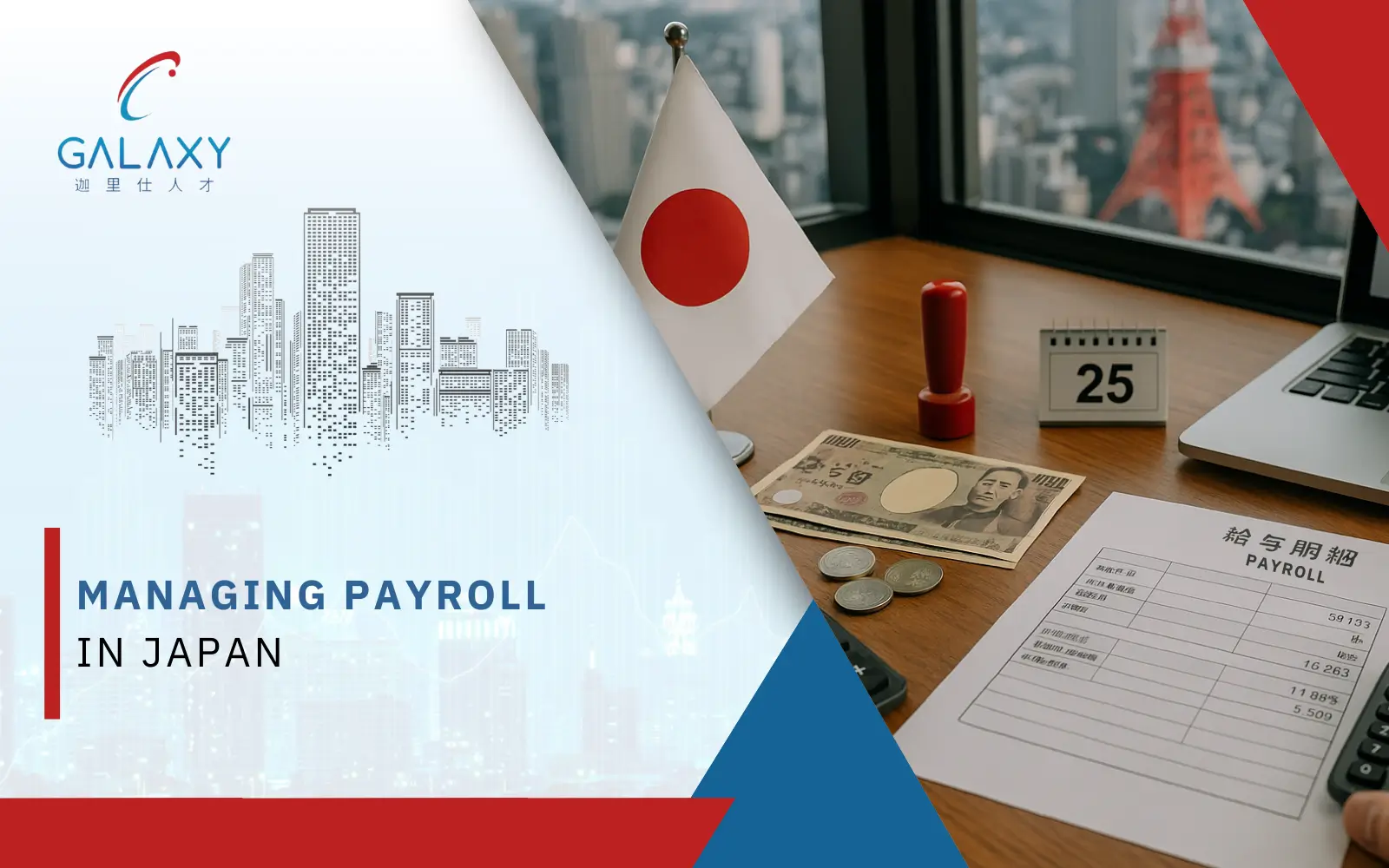
Managing payroll in Japan with compliance and efficiency

Japan’s employment landscape is shifting, driven by labour law changes, an ageing workforce, and rising demand for specialised talent. Payroll here is more than salary processing—it’s a legally regulated system tied to taxes, social insurance, and mandatory bonuses, influenced by factors like residency, role, and working hours.

As workforce dynamics evolve, payroll has become a strategic function requiring legal compliance, cultural awareness, and employee focus. This blog outlines Japan’s payroll framework, key compliance rules, and practical guidance for managing it effectively.

What Are the Key Components and Legal Requirements of Japan Payroll?

Running payroll in Japan requires precision and strict adherence to regulatory requirements. From accurate tax deductions to meeting tight payment deadlines, every process must comply fully with the law. Beyond fulfilling statutory obligations, effective payroll management demonstrates a company’s commitment to transparency, reliability, and respect for its employees.

Key Components of Payroll in Japan :

 1. Basic Salary and Allowances

The employee’s base pay, which is specified in the employment contract and paid regularly, is the main component of every payroll. Furthermore, many businesses provide additional funds for expenses such as housing, transportation, or supporting dependents. These extras are a common way to help employees beyond the necessities, though they can vary depending on the company, industry, and role of the employee.

2. Working Hours and Overtime Pay

Japan has strict guidelines around working hours. A typical workweek is capped at 40 hours, with no more than 8 hours a day. If employees clock in extra hours, they must be compensated—usually at 25% above their usual rate. This rate goes up even further for late-night work or public holiday shifts, reflecting the value placed on work-life balance and fair pay.

3. Bonuses

Bonuses are a big part of Japanese corporate life. While not legally required, it’s customary for companies to pay them twice a year—often in the summer and winter. These payouts can equal one or two months of salary and are seen as a way to reward loyalty and performance.

4. Deductions and Contributions

Every month, employers need to set aside specific amounts from their employees’ salaries. This includes income tax, resident tax, and contributions to Japan’s social insurance programs. These programs help cover health insurance, pension, unemployment benefits, and long-term care. They offer essential support and peace of mind for employees and their families.

5. Payslips and Payroll Reports

Payslips are standard practice in Japan. They give employees a transparent look at how their salary breaks down—what’s been added, what’s been deducted, and what they’re taking home. Behind the scenes, companies must also keep detailed payroll records to stay on top of taxes and social contributions.

Legal Responsibilities Every Employer Must Fulfil

1. Enrolling Employees in Social Insurance

Employers must enrol full-time employees in Japan’s national social insurance program. This ensures that workers can access necessary benefits. The Japan Pension Service and relevant health insurance organisations oversee this program.

 2. Handling Withholding Tax

In addition to paying salaries, employers must use official tax tables to determine and withhold the appropriate amount of income tax. By doing this, taxes are paid accurately all year long, preventing unpleasant surprises.

3. Staying Compliant with Labour Laws

From drawing up employment contracts to paying wages on time and respecting working hour rules, businesses must follow the Labour Standards Act. Failing to do so can result in penalties—and damage a company’s reputation with both authorities and employees.

4. Making Year-End Tax Adjustments (Nenmatsu Chosei)

Companies are expected to make a final tax adjustment for every employee at the end of the year. This guarantees that all taxes paid during the year, including any deductions for dependents or insurance, reflect the employee’s actual circumstances. It’s essential to end the payroll year on a positive note.

Choosing the Right Payroll Company in Japan: Local, Global or Regional

CriteriaLocal ProvidersRegional ProvidersGlobal Providers
Regulatory ExpertiseDeep understanding of Japan’s payroll laws, labour codes, and social security norms.Covers Japan along with broader Asia-Pacific regulations.Offers compliance at a global level, with coverage of Japanese rules as part of the package.
Language & Local SupportOperates in Japanese, with local teams familiar with cultural and business nuances.Often, bilingual support teams are familiar with regional expectations.Centralised, multilingual service—may not always provide native-language assistance.
Technology PlatformsMay rely on traditional systems or offer basic digital tools.Provides mid-level automation and limited integrations.Uses advanced platforms with automation, analytics, and integrations at scale.
ScalabilityTailored for businesses operating solely in Japan.Suitable for companies expanding across the Asia-Pacific.Built for global teams and multi-country payroll management.
Cost StructureGenerally, it is more cost-effective for domestic operations.Balanced pricing with value-added regional features.Premium-priced, with broad functionality and enterprise-grade support.
Cultural FitHigh alignment with Japanese work culture and local employee expectations.Understands a mix of regional cultures and workplace norms.Standardised service model, which may overlook country-specific nuances.
Best Fit ForDomestic companies with no plans for regional expansion.Businesses are growing across multiple Asian markets.Enterprises managing global workforces and international payroll compliance.


Japan Employment Laws That Impact Payroll Operations

Comprehending the legal framework is essential for processing payroll accurately in Japan. Payroll system implementation and management are influenced by a number of crucial labour laws that regulate compensation, deductions, and employee protections.

Labour Standards Act (LSA)

This is the bedrock of all payroll regulations in Japan. It sets the rules every employer must follow when it comes to wages and working hours.

1. Wages must be paid at least once a month, in full, and directly to the employee.

2. Standard working hours are capped at 40 hours per week (or 8 hours per day).

3. Overtime must be compensated with additional pay—higher rates apply for late-night work, weekends, or public holidays.

4. The Act also outlines termination procedures, mandatory rest days, and rules on work breaks.

Minimum Wage Law

Minimum wages aren’t uniform in Japan—they vary by prefecture and are updated annually.

1. Each region sets its minimum hourly wage, and employers must stay updated on the latest rates.

2. Payroll must reflect the local rate based on where the employee works, not where the company’s head office is located.

3. Businesses with multiple locations need to monitor and update wage compliance regularly to avoid penalties.

Social Insurance Laws

Social insurance is non-negotiable in Japan—and it plays a key role in payroll.

1. Employers are legally required to register eligible employees under four main insurance programs:

  •  Health Insurance
  •  Employee Pension Insurance
  •  Unemployment Insurance
  •  Workers’ Compensation Insurance

2. Contributions are shared between the employer and the employee.

3. Deductions must be accurately calculated and withheld every month.

4. Rates vary depending on age, salary, and insurance type, so payroll must be precise and updated.

Income Tax Withholding

Japan follows a Pay-As-You-Earn (PAYE) system, which puts the onus on employers to manage monthly tax deductions.

1. Employers are expected to withhold income tax from salaries every month—it’s a regular part of payroll in Japan.

2. The amount deducted depends on several factors, including the employee’s income, the number of dependents, and their residency status.

3. At the end of the year, there’s a process called nenmatsu chosei, which helps balance out any overpaid or underpaid taxes.

4. Getting tax calculations wrong can create compliance problems, so it’s essential to be precise and double-check everything.

Equal Pay for Equal Work

Recent legal reforms are pushing companies toward fairer pay structures.

1. Non-regular employees—like part-timers, contract workers, or dispatch staff—must be compensated fairly based on the job they do, not their employment status.

2. This includes salaries, bonuses, and benefits.

3. As a result, companies often need to restructure their payroll systems and review internal policies to ensure compliance.

Working Hours and Overtime Regulations

Time tracking isn’t just a good habit—it’s something every employer in Japan is legally required to do.

1. The law limits working hours to 8 hours a day and 40 hours a week.

2. If employees work beyond that, overtime pay kicks in:

  •  125% of their regular rate for standard overtime
  • 135–150% for late-night shifts or work on holidays

To stay compliant, companies need a proper time-tracking system that records working hours accurately and matches up with labour regulations.

Paid Leave Entitlements

Paid leave is a statutory right, and it directly affects payroll records and planning.

1. Employees earn paid leave after six months of continuous employment.

2. The number of leave days increases with years of service.

3. Employers are responsible for:

  • Tracking leave accruals
  • Ensuring employees take the leave
  • Reflecting paid leave accurately in payroll calculations

Termination and Severance Guidelines

When employment ends, employers have a legal and financial responsibility to settle dues properly.

1. Severance isn’t mandated by law, but many companies offer it as part of company policy or contracts.

2. Final payroll must include:

  • All outstanding wages
  • Payment for unused paid leave
  • Any applicable deductions

3. Proper documentation and notice periods must be followed to ensure lawful termination.


Minimum Wage and Average Salary Trends in Japan

Japan’s pay rates are more than just figures on a spreadsheet; they are a reflection of the nation’s changing economic landscape, cost of living, and labour standards. Understanding these standards enables you to make reasonable, competitive offers and maintain compliance when hiring in Japan.

MetricValue (2025)What It Means for Employers
National Minimum Wage~¥1,118 per hourA historic ¥63/hour increase—the biggest in over 20 years—means payroll budgets need a fresh look.
Regional Wage Variance¥951–¥1,163 per hourBig cities like Tokyo sit at the top end, while smaller regions have lower rates. Location matters when setting pay.
Average Annual Salary~¥5.42 million JPY (~US $37K)A useful benchmark for full-time roles across most industries.
Median Monthly Salary¥472,000 (~US $3,300)Gives a truer sense of what most employees take home.
Entry-Level and Part-Time Pay~¥290,000/month; ~¥1,597/hourHandy when planning packages for junior hires, interns, or hourly workers.

Key Takeaways for Payroll Planning

1. Wages are Rising

The most significant minimum wage jump in decades means higher payroll costs for both existing staff and new hires.

2. Location makes a Difference

Pay in Tokyo can be hundreds of yen per hour higher than in regional areas, so one-size-fits-all salaries don’t always work.

3. Look at the Median, not just the Average

This gives a more realistic view of what employees earn and helps keep your offers competitive.

4. Plan for all types of hires

Whether you’re taking on full-time staff, part-timers, or short-term contractors, knowing market rates keeps you ahead of the curve.

Is Payroll Outsourcing in Japan the Right Move for a Business?

Managing payroll in Japan involves more than just cutting paychecks—it’s about staying on top of complex regulations, reporting duties, and social insurance contributions. For many companies, especially those growing or expanding, outsourcing payroll can be a smart way to keep things simple, reduce compliance risk, and free up time to focus on the bigger picture.

Here’s a quick breakdown of the benefits, challenges, and strategic value of payroll outsourcing, based on what matters when making the decision.


CriteriaProsConsStrategic Value
Compliance with Japanese labour lawsAccurate statutory handlingLimited in-house controlReduces legal exposure
Resource allocationSaves time on admin tasksInitial setup effortsFrees up internal teams for core work
Payroll accuracyMinimises calculation errorsVendor response times may varyMaintains payroll reliability
Operational costsReduces the need for the whole payroll staffMay involve service feesPredictable and scalable cost structure
Business expansionEasily scales across locationsSwitching providers can be disruptiveSupports multi-site or global growth
Data handling & securityProfessional data safeguardsDashboard access may differProtects sensitive employee and financial data

Payroll Dynamics in Japan: What’s Changing and Why It Matters

In Japan, payroll is no longer just an administrative task happening quietly in the background. It’s becoming a strategic function that directly supports business growth. From new regulations to rising employee expectations and rapid digital transformation, several key trends are reshaping how companies manage compensation today.


Automation of Payroll Processes

1. Businesses are adopting automated payroll tools to minimise manual errors and reduce processing time.

2. These systems help stay on top of local tax and insurance requirements by flagging compliance gaps.

3. The result: more accurate, on-time payments and a lighter administrative load for HR and finance teams.


Shift to Digital Payment Methods

1. Digital options like PayPal and mobile wallets are now complementing traditional bank transfers.

2. This offers faster, more flexible payment experiences, especially valued by younger employees and remote talent.

3. It also enables smoother integration with other digital HR systems.


Flexible Compensation Models

1. Employers are experimenting with new pay models like early wage access, remote work allowances, and project-based bonuses.

2. These personalised benefits help companies stand out in a competitive hiring market.

3. They also reflect a shift toward employee-centric payroll practices.


Enhanced Focus on Compliance and Risk Management

1. With labour laws and tax codes frequently updated, staying compliant is more complex than ever.

2. Payroll platforms with built-in alerts and audit logs help mitigate legal risks.

3. Taking a proactive approach helps protect your company’s reputation while showing your team that you’ve got their back.


Integration with Global Payroll Systems

1. Companies operating across borders are moving toward unified payroll platforms.

2. This supports better handling of expat salaries, multi-currency payments, and localised reporting.

3. The outcome is greater visibility and control over workforce costs globally.

How Can You Manage Payroll Across Borders While Staying Compliant in Japan?

Managing payroll across countries isn’t just about paying people on time. It’s about giving your team a smooth, consistent experience—no matter where they are. If operating in Japan or expanding into it, here are some practical ways to build a strong and scalable payroll setup:

1. Build a Consistent Payroll Framework

It helps to create standard processes across all regions. When the structure is consistent, onboarding new countries becomes much easier. Everyone knows what to expect, and it cuts down on confusion when scaling up.

2. Put Local Compliance First

Japanese labour laws, tax systems, and social insurance rules are unique—and they change often. You don’t need to track everything yourself, but you do need local expertise. Partnering with people who know the terrain helps you avoid missteps.

3. Centralise Your Payroll

Using a unified system means you’re not juggling spreadsheets or regional tools. You get a clear view of payroll activity in every location, can generate reports easily, and ensure each country follows the same baseline of accuracy.

4. Stay Adaptable with Currency and Tax Rules

Exchange rates fluctuate. Tax slabs shift. Payroll software that can handle real-time changes takes the stress out of these variables and keeps salary calculations on point. That’s key to maintaining high trust and minimising errors.

5. Make Data Security a Priority

More countries, including Japan, are tightening data privacy regulations. Your payroll system should be equipped to keep sensitive information safe. This isn’t just about compliance—it’s about protecting your team and your brand.

6. Cover All Types of Workers

Whether someone is full-time, on a contract, or working remotely from another country, your payroll should accommodate different setups. Japan’s employment categories have specific rules, so flexibility is essential.

7. Run Regular Payroll Reviews

Set time aside to audit your payroll system. Even minor inconsistencies can turn into larger compliance risks over time. Routine check-ins keep things clean and show regulators that you’re being proactive.

8. Connect Payroll with HR and Finance

Your payroll doesn’t exist in a vacuum. When it talks to your HR and finance systems, you get better visibility on headcount, costs, and projections. It also reduces redundant work and accelerates internal processes.

What Should You Look for When Selecting a Payroll Company in Japan

Picking a payroll partner in Japan isn’t just about checking off requirements. It’s about finding someone who understands the way things work here and can make payroll simple for your team. Here’s what to keep in mind:

1. Deep Understanding of Local Rules

Japan has specific laws around payroll, taxes, and social insurance. You’ll want a provider who knows these inside out so you don’t have to worry about compliance.

2. Handles Both Local and International Teams

If you’re managing employees in different countries, choose someone who can support global operations without missing local details.

3. Clear Communication (in English and Japanese)

Communication should be easy. It helps if your provider can explain everything in plain English and also handle local discussions in Japanese.

4. Smart and Secure Tech

Look for a platform that’s easy to use, automates routine tasks, and protects your team’s data according to Japanese standards.

5. Flexible Support That Scales With You

Whether you’re growing or adjusting your operations, your payroll setup should keep up—not hold you back.

6. Transparent Pricing

No one likes surprise fees. Make sure the pricing is straightforward and clearly outlined from the start.

7. Proven Experience

It helps to work with a provider who’s done this before. Ask for examples or case studies to see how they’ve supported similar businesses.

conclusion

Running payroll in Japan isn’t just about paying people on time. It’s about navigating local rules, earning employee trust, and staying on the right side of compliance. From tax to social insurance to reporting, Japan’s regulations don’t always follow global norms. That’s why having the proper support can make your life a lot easier and your operations a lot smoother.

At Galaxy Group, we work with businesses to simplify payroll operations in Japan. From hiring your first employee and exploring EOR solutions for quicker market entry to fine-tuning existing payroll processes, our team offers local knowledge and hands-on support. We help you stay compliant, reduce manual effort, and create a smoother experience as you grow your team in Japan.

 Our Quick Guide on : A Guide to Attaining Work Visas in Japan: Eligibility, Essentials and Key Insights

Need help running payroll in Japan?

 Let’s simplify your setup and keep you compliant.

FAQ’S

Is it hard to run payroll in Japan as a foreign company?

 It can be tricky without local expertise. Japan has unique labour laws, tax rules, and reporting standards. That’s why many businesses prefer to partner with a local payroll company to get it right from day one.

 Employers in Japan are responsible for withholding income tax and contributing to health insurance, pension, and unemployment insurance. These rules change often, so staying up to date is essential.

 Yes, most companies do. Outsourcing your payroll means a local partner handles everything—from salary calculations and payslips to tax filings and social insurance submissions.

 Salaries are usually paid monthly via bank transfer. It’s also common to provide bonuses twice a year. Timeliness and accuracy are highly valued by employees here.

 The easiest way is to work with a payroll provider who understands Japanese regulations. They’ll help you manage payroll, reporting, and contributions, even as your team grows or changes.

Guide to Corporate Tax Filing in Singapore 2025

Guide to Corporate Tax Filing in Singapore 2025

Guide to Corporate Tax Filing in Singapore 2025

As we enter the second half of 2025, businesses in Singapore must begin preparing for corporate tax filing for the Year of Assessment (YA) 2025. Compliance with IRAS is more than a legal obligation—it is central to sound business governance for both start-ups and established enterprises.

This year brings key changes, including enhancements to the filing process and new digital tools from IRAS that simplify compliance. By preparing early, businesses can ease the pressures of tax season and manage their obligations with confidence.

In this blog, we outline essential deadlines, required forms, recent IRAS updates, and common mistakes to avoid. We also consider how partnering with a professional tax and accounting firm can streamline filing and provide valuable strategic insights.

Overview of Corporate Tax Filing in Singapore

In Singapore, corporate tax filing is a statutory obligation for all registered companies. Businesses are required to file their income tax returns with the Inland Revenue Authority of Singapore (IRAS), declaring chargeable income—profits after deducting allowable business expenses.

Although the corporate tax rate is fixed at 17%, many organisations benefit from partial exemptions, rebates, and government incentives that effectively reduce their overall tax liability. This favourable tax framework continues to position Singapore as an attractive destination for regional headquarters and international investors.

The process typically includes three key steps:


1. Submitting Estimated Chargeable Income (ECI)

An early estimate of taxable income, usually due within three months after the financial year ends, unless exempted.


2. Choosing the Correct Tax Form

Companies must file either Form C-S, Form C-S (Lite), or Form C based on their revenue and business type to ensure proper submission.


3. Meeting Filing Deadlines

Timely filing is crucial to avoid penalties and maintain compliance.

Making tax filing part of regular financial management not only simplifies the process but also helps businesses optimise cash flow and access government benefits. Seeing tax filing as a strategic concern instead of a mundane task can enhance your business’s financial well-being and bolster its position in Singapore’s corporate ecosystem.

Key Updates from IRAS for Year of Assessment (YA) 2025

The Inland Revenue Authority of Singapore (IRAS) implements changes every Year of Assessment (YA) that may have an impact on how businesses handle deductions, file taxes, and apply for reliefs. It’s critical to stay up to date on these changes to maximise your tax position, prevent surprises, and stay in compliance.

The following summarises the key changes for YA 2025 that companies need to know about:


Revised Income Tax Treatment

1. Capital Allowances: Low-value assets (under S$5,000) can now be fully expensed in the year of purchase, simplifying  capital allowance claims.

2. FSIE Regime: Foreign-sourced dividends, branch profits, and service income must meet enhanced economic substance criteria to qualify for tax exemption.

3. Documentation Requirements: Stricter rules on documentation and classification for asset purchases and expense claims are now in effect to ensure compliance.


Enhanced Digital Filing Requirements

1. From this year, IRAS requires all companies to submit corporate tax returns exclusively through the myTax Portal.

2. Paper submissions are no longer accepted, streamlining the filing process.

3. Digital filing reduces errors and enhances accuracy.

4. Online submissions enable faster processing, improving overall tax administration efficiency.


New Guidance and Clarifications

1. IRAS has updated its e-Tax Guides to make it easier to identify deductible expenses.

2. Employee benefits, entertainment, and R&D expenses are a key focus.

3. These updates help businesses stay compliant and claim all eligible deductions.

4. Clarifications on start-up tax exemptions now cover mergers, acquisitions, and restructuring.

5. Understanding these changes helps businesses plan taxes better and avoid compliance issues.

As Singapore’s government adjusts to new policies and the economy, tax laws frequently change. Maintaining IRAS updates enables your company to maximise tax benefits, stay in compliance, and steer clear of expensive mistakes.

Simply put, being informed offers you the opportunity to save money, expedite your procedures, and feel secure knowing that your tax returns are accurate—it’s not just about fulfilling regulations.

What Are the Key Corporate Tax Filing Deadlines for 2025?

Timely corporate tax filing in Singapore is more than a procedural requirement; it is a fundamental aspect of sound corporate governance. Missing a deadline can disrupt financial operations and expose businesses to penalties, interest charges, or enforcement action from the Inland Revenue Authority of Singapore (IRAS). For the Year of Assessment (YA) 2025, the first step towards compliance is a clear understanding of the filing timeline.

Filing ItemDeadline
Estimated Chargeable Income (ECI)Within 3 months of the end of the financial year
Form C, Form C-S, or C-S (Lite)30 November 2025

Understanding the Deadlines

1. Estimate Chargeable Income(ECI)

Non-exempt companies must submit their ECI within three months of the end of their fiscal year (FYE).

IRAS receives an early indication of your company’s taxable income for the year from this estimate. Unless your business is eligible for an administrative waiver, the ECI must be submitted even if your estimated income is zero.


2. Form C, C-S, or C-S (Lite)

This is the yearly income tax return for your business. After your financial statements are finalised, they need to be filed.

Larger or more complex businesses may need to use the complete Form C, but the majority of companies are eligible to file the simplified versions, Form C-S or C-S (Lite).

The submission deadline is November 30th, regardless of your FYE.


Managing Your Filing Timeline and Staying Compliant


On-time corporate tax filing keeps your company in compliance and helps you avoid needless fines.

The tax year is determined by your Financial Year-End (FYE). For instance, your income is assessed in YA 2025 if your FYE is December 31, 2024. Planning makes filing go more smoothly.

You can update your Estimated Chargeable Income (ECI) within IRAS’s timeframe if your income projections change after you’ve submitted it. By doing this, overpayment or underpayment can be prevented.

A Notice of Assessment (NOA) will be sent by IRAS following filing. Usually, you have one month to pay. GIRO is widely used by businesses to distribute payments and control cash flow.

Missing deadlines can trigger estimated assessments, penalties of up to $1,000, and in severe cases, legal action. Staying organised and filing on time protects your business and keeps things running smoothly.


Choosing the Right Tax Form

IRAS provides three distinct tax return forms, each tailored to different business profiles. Choosing the appropriate form streamlines compliance, minimises administrative burden, and reduces the likelihood of unnecessary correspondence with the tax authority.

A Quick Breakdown of the Tax Forms


FormWho It’s ForWhat It Involves
Form CAny company, regardless of sizeThe most detailed option. You’ll need to submit full financials and supporting documents.
Form C-SCompanies earning SGD 5 million or lessA simpler version. Financial statements are only required if IRAS asks.
Form C-S (Lite)Smaller companies earning SGD 200,000 or lessThe easiest form. Minimal reporting. Great for tiny, straightforward businesses.


How to Choose the One That Fits?


Here’s what to think about when deciding which form to use:

1. How much revenue you’re making: This helps determine if you qualify for the simplified options.

2. How complex your business is: If you’ve got overseas income, multiple entities, or a group structure, you’ll likely need to file the complete Form C.

3. How ready your documents are: If your financials aren’t finalised, a simplified form may be more practical (as long as you qualify).

Getting the form right from the start helps avoid delays, extra paperwork, or questions from IRAS later on. It’s a small but essential step toward an easier tax season.

How to Avoid Common Corporate Tax Filing Pitfalls in Singapore?


Pitfall Why It Matters How to Stay on Track
Disorganised Records Incomplete or inaccurate records can lead to filing mistakes and missed deductions. Maintain up-to-date accounts and reconcile them regularly.
Missed Deadlines Late ECI or Form C/C-S submissions can lead to penalties and compliance issues. Follow a clear filing calendar and prepare documents ahead of time.
Incorrect Tax Form Using the wrong form can delay processing and require resubmission. Review the IRAS criteria each year to ensure the correct form is used.
Ineligible Claims Claiming deductions you don’t qualify for may trigger audits or repayments. Verify all claims against the latest IRAS guidelines before filing.
Skipping Final Review Unchecked submissions may contain avoidable mistakes. Always conduct a thorough pre-submission review.
 

How does a Tax and Accounting Firm Adds Value Beyond Compliance?

For many organisations, working with a tax or accounting firm is often viewed as a procedural necessity—ensuring returns are filed accurately and compliance requirements are met. However, the right firm can serve as a genuine strategic partner, delivering far more than regulatory assurance.


1. Strategic Tax Planning That Looks Ahead

Advisors go beyond preparing returns by identifying opportunities to minimise tax liabilities while remaining fully compliant with IRAS guidelines. Examples include:

  • Research and Development (R&D) tax benefits to encourage innovation
  • Productivity and Innovation Credit (PIC) schemes to enhance efficiency
  • Double Tax Deduction for Internationalisation (DTDi) for expanding into overseas markets

Proactive tax planning ensures decisions are integrated into the broader business strategy rather than addressed only at filing time.


2. Staying Ahead of Regulatory Changes

Singapore’s tax laws are still changing. A professional firm ensures compliance while optimising available benefits by staying up to date on legislative updates, including modifications to filing requirements and new incentives.


3. Expertise in Structuring and Complex Transactions

Corporate restructuring, inter-company dealings, and cross-border taxation require careful planning. Experienced advisors design tax-efficient, compliant structures that minimise risks and optimise financial outcomes.


4. Enhancing Operational Efficiency

Time and effort are frequently required for tax management, particularly during hectic filing seasons. By collaborating with a capable company, internal teams can concentrate on long-term growth and key business priorities. These businesses can increase accuracy, streamline submissions, and produce reports more quickly and clearly with the help of contemporary digital tools.


5. Supporting Growth and Transformation

During expansion, restructuring, or entry into new markets, having access to specialised expertise provides clarity and confidence in decision-making. Advisors assist in foreseeing difficulties, coordinating plans with corporate objectives, and laying the groundwork for sustained success.

Filing taxes is just the starting point. The real value comes from having a partner who is proactive, insightful, and committed to helping your business thrive.


Also Read : Effective Taxation & Tax Planning Strategies for Businesses in Hong Kong Tax and Accounting Support to help your Business Achieve Unmatched Growth

Corporate Tax Filing Checklist

There is no need for a last-minute, hectic rush when filing corporate taxes. The entire process becomes more accurate, less stressful, and more seamless with a well-defined procedure and consistent preparation. To help tax teams stay on course from beginning to end, this checklist divides the procedure into manageable steps.

StageKey ActionsDeadline / Notes
Pre-Filing Preparation

✅ Finalise audited or unaudited financial statements in accordance with reporting standards.

✅ Verify that revenue, expenses, and adjustments are accurate and complete.

✅ Calculate Estimated Chargeable Income (ECI) using the most recent financial data.

✅ Prepare supporting schedules for capital allowances, donations, and other relevant deductions.

Submit ECI via myTax Portal within 3 months after the financial year-end.
Form Selection

✅ Determine eligibility for Form C-S or C-S Lite, based on revenue and qualifying conditions.

✅ Select Form C for businesses with complex income sources, overseas operations, or group structures.

Review IRAS eligibility criteria annually to ensure correct form selection.
During Filing

✅ File the corporate tax return exclusively via myTax Portal.

✅ Include all required schedules, declarations, and documentation in a single submission to prevent delays.

Filing deadline: 30 November 2025.
Avoiding Common Pitfalls

❌ Delaying preparation until the last minute.

❌ Submitting the wrong form and requiring resubmission.

❌ Omitting necessary supporting documents.

These errors can lead to penalties, processing delays, and additional compliance scrutiny.
Post-Filing Follow-Up

✅ Monitor IRAS communications and respond promptly to any clarifications requested.

✅ Archive all submission confirmations, computations, and schedules for reference or audit purposes.

✅ Arrange timely payment within one month of the Notice of Assessment to avoid late payment penalties.

Payment is due within 1 month of receiving the NOA.

conclusion

A well-managed tax filing process in Singapore does more than ensure compliance—it supports financial clarity and builds confidence with stakeholders.

To prepare for YA 2025, businesses should stay updated on IRAS requirements, keep records in order throughout the year, and choose the correct return form well in advance. Early preparation reduces the risk of errors and helps ease the pressures of tax season.

With its expertise in corporate tax and cross-border compliance, Galaxy Group guides businesses through every stage, from planning and filing to follow-up. By offering tailored strategies, detailed reviews, and practical support, the team helps organisations meet their obligations smoothly while keeping future growth in focus.

A structured, forward-looking approach not only ensures compliance but also strengthens financial resilience and long-term sustainability.

Stay Ahead This Tax Season

Get expert tax and accounting support to ensure timely, accurate, and hassle-free corporate tax filing in 2025.

FAQ’S

Which companies are required to file corporate income tax in Singapore?

All companies incorporated in Singapore, both private and public, as well as foreign company branches with operations in Singapore, must file corporate income tax. Sole proprietors and partnerships are taxed under personal income tax instead of corporate tax.

The Estimated Chargeable Income (ECI) must be filed within three months after the company’s financial year-end.

The final corporate tax return, whether it is Form C, Form C-S, or Form C-S Lite, needs to be filed by 30 November 2025.

Yes. Companies can receive a 50% corporate tax rebate, capped at S$40,000. In addition, qualifying companies with at least one local employee may receive an extra S$2,000 cash grant.

The standard corporate tax rate is 17% on chargeable income. However, many companies pay less in effective tax due to exemptions and incentives, such as startup tax relief or partial tax exemptions.

The Inland Revenue Authority of Singapore (IRAS) offers updated resources, including step-by-step guides, FAQ pages, and basic tax calculators to help companies prepare and file their returns accurately.