Search
Close this search box.

Blog

What are China’s Labour Laws and What do they Mean for Employers?
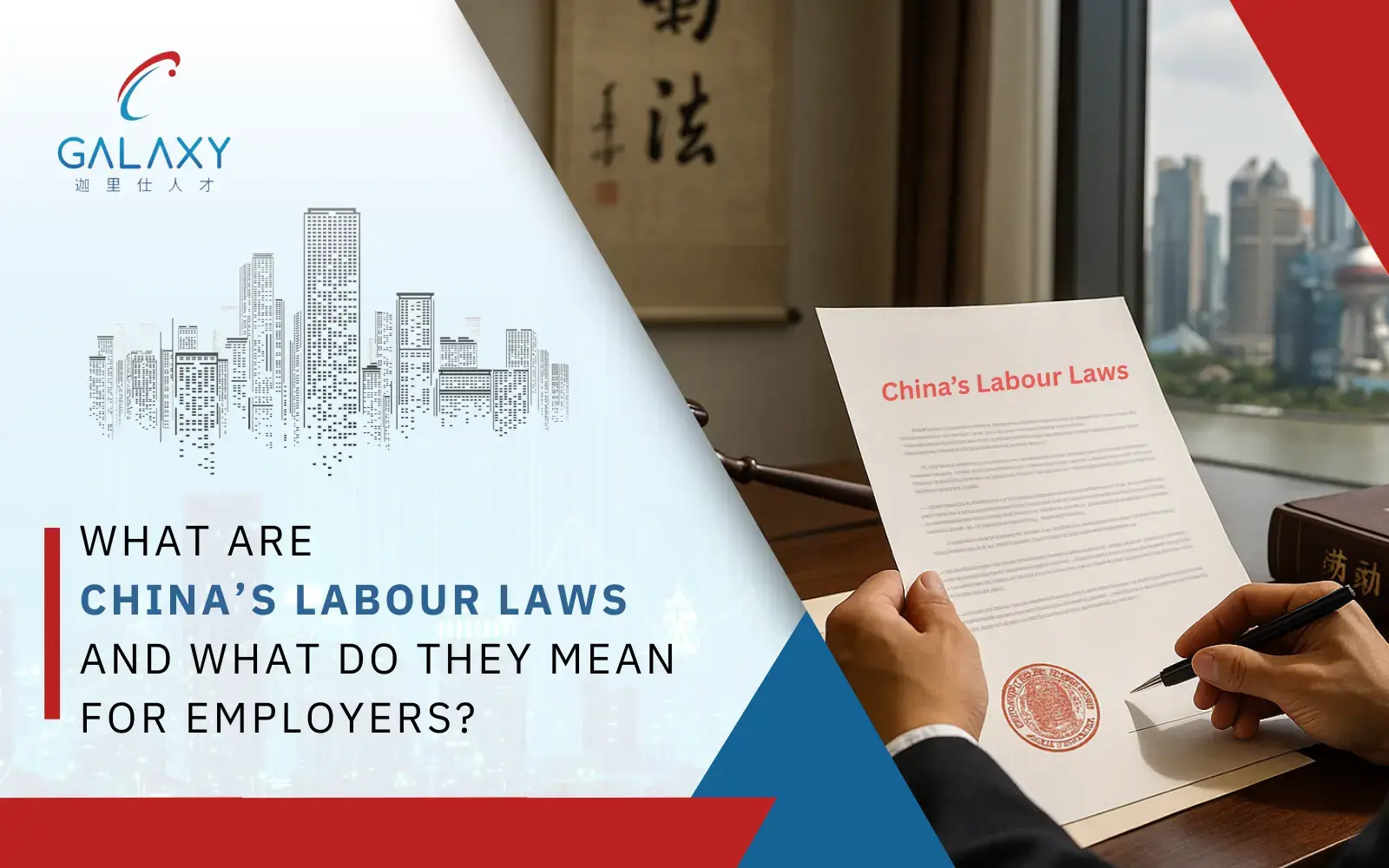
What are China’s Labour Laws and What do they Mean for Employers?

A person reviews a document titled "China’s Labour Laws" at an office desk with cityscape in background.

In recent years, China has reaffirmed its position as a global powerhouse, not only in manufacturing but also in technology, pharmaceuticals, and logistics. For businesses seeking to tap into this vast economic opportunity, navigating the country’s labour laws is a non-negotiable requirement.

In this blog, we will break down the most critical areas of China’s labour laws, covering everything from employee contracts and social insurance to foreign hiring regulations and legal termination procedures. 

If you’re entering the Chinese market for the first time or expanding your operations, this guide from Galaxy Group provides both clarity and strategic direction.

Why China’s Labour Laws Matter Now More Than Ever

With its growing role in global commerce, China’s employment law in 2025 remains central to business risk and continuity. Employers are facing increasing scrutiny from regulatory authorities regarding contract issuance, insurance payments, and dismissal procedures. Non-compliance can result in litigation, fines, and reputational harm.

Unlike some jurisdictions that allow greater flexibility in employment relationships, China’s employment law regime is both formal and enforcement-driven. Contracts must be documented in writing, social insurance payments are mandatory, and even minor procedural errors, such as delayed termination notices, can expose employers to costly legal disputes.

For multinational companies, startups, and HR professionals seeking to expand in or hire from China, a thorough understanding of employment law in China is essential. Not only does it minimise compliance risks, but it also enhances employee trust, operational continuity, and long-term sustainability.

Did You Know?

 Employers in China must sign a written employment contract within one month of the employee’s start date. Failure to do so can result in double salary penalties.

How are Labour Regulations Structured and Enforced in China?

China’s labour system is underpinned by a comprehensive legal structure, combining national legislation, administrative regulations, judicial interpretations, and local-level implementation.

Employers operating in China must navigate a complex and multifaceted legal environment to remain compliant and avoid costly disputes

China’s Labour Law Hierarchy

            NATIONAL LEGISLATION                

 Labour Law (1994) and Labour Contract Law (2008) 

  JUDICIAL INTERPRETATIONS 

Supreme People’s Court Guidance

  ADMINISTRATIVE REGULATIONS

    Ministry of Human Resources (MOHRSS) 

                      LOCAL REGULATIONS                   

     Provincial/Municipal Labour Bureaux

1. Labour Law of the People’s Republic of China (1994)

This foundational statute establishes the fundamental rights and obligations of employers and employees, including working hours, rest and leave, remuneration, occupational safety, and social security. It serves as the overarching framework for employment relationships.

2. Labour Contract Law (2008)

More detailed and prescriptive, the Labour Contract Law focuses on individual employment contracts. It mandates the use of written agreements, sets rules for probation, renewal, and termination, and outlines severance pay obligations. 

3. Judicial Interpretations by the Supreme People’s Court

In practice, the application of labour laws often hinges on judicial interpretations issued by the Supreme People’s Court. These interpretations guide grey areas, such as dispute resolution, unfair dismissal, or contract loopholes, and are binding on lower courts. For employers, they are crucial for anticipating how courts may enforce or interpret labour provisions.

4. Administrative Regulations and Departmental Rules

Ministries such as the Ministry of Human Resources and Social Security (MOHRSS) and local Human Resources and Social Security Bureaux issue detailed regulations to facilitate implementation. These cover areas such as wage standards, arbitration procedures, insurance contributions, and employment permits for foreign nationals.

5. Local Regulations and Practices

While national laws set the baseline, China’s provincial and municipal governments may introduce their own employment rules, particularly regarding Minimum wage standards, Social insurance contribution rates, Work hour flexibility (e.g., comprehensive or irregular systems)

These local rules must be carefully reviewed, especially by companies operating across multiple provinces, as regional variations can be significant.

Understanding Employment Contracts under Chinese Labour Law

Written employment contracts in China are legally mandatory and form the foundation of every employment relationship.
These are the types of contracts permitted under law:

  • Fixed-term contracts – Most common, with defined start and end dates.
  • Open-ended contracts – No expiry; required after two consecutive fixed-term renewals or 10 years of service.
  • Project-based contracts – Valid until completion of a specified project.

Mandatory Clauses:

All employment contracts in China must include key details such as job responsibilities, working hours and location, salary and benefits, probation period (if any), social insurance contributions, and termination conditions.

Probation Period Limits: 

Legally allowed but strictly regulated. Depending on contract length, probation can range from 1 to 6 months, and employees must receive at least 80% of their agreed wage during this period.

Non-Compliance Risks: 

Failing to issue a compliant contract may lead to double wage penalties, automatic conversion to open-ended contracts, administrative fines, and limited legal recourse in disputes.

Quick Fact: In China, contracts should always be bilingual (Chinese + English), signed by both parties, and reviewed by local legal counsel to avoid disputes and ensure enforceability.

Understanding how to structure compliant contracts in China is essential; equally important is aligning these with your global policies. Refer to our international contracting guide for a broader perspective

Working Conditions in China: Hours, Leave, and Social Insurance PEZA Investment Framework?

In China, employers are required to comply with statutory standards regarding working hours, leave entitlements, and social insurance contributions. 

  • The standard work schedule is limited to 8 hours per day and 44 hours per week, with overtime permitted only under approved conditions and requiring additional compensation. Employers in specific industries, such as R&D or senior management, may apply for flexible or comprehensive working hour schemes with government approval.

  • Leave entitlements include 5–15 days of paid annual leave (based on years of service), maternity leave of at least 98 days, paternity leave ranging from 7 to 30 days, and sick leave supported by a medical certificate. Marriage and bereavement leave vary by province, so regional policies must be closely monitored.

  • Additionally, employers are required to contribute to five social insurance schemes: pension (~20%), medical (~10%), unemployment (~1%), work-related injury (0.5%–2%), and maternity (~1%), as well as a housing fund contribution between 5% and 12%, depending on location. These contributions are crucial to ensuring employee welfare and maintaining full legal compliance.

Minimum Wage in China : National Mandate, Local Control

Unlike some countries with a unified minimum wage system, China adopts a decentralised approach, granting each province and municipality the authority to set and adjust its minimum wage based on local economic conditions, living costs, and labour market dynamics. This means that the minimum wage in China can vary significantly depending on the location of a business.

As of 2025, here are examples of current monthly minimum wage standards in key regions:

LocationMonthly Minimum Wage (Approx.)
BeijingCNY 2,420
ShanghaiCNY 2,690
SichuanCNY 1,820

Wages are reviewed annually, and many regions also publish hourly rates. Businesses must stay updated, as non-compliance can lead to back payments, fines, or even licence suspension.

Also Check Out: Minimum Wage Trends in 2025 : A Comprehensive Global Overview.


What are the Opportunities and Restrictions in Hiring Foreign Workers in China?

Engaging foreign job professionals can offer Chinese employers access to global expertise and specialised skills. However, China maintains a tightly regulated framework for foreign employment, and employers are fully accountable for compliance throughout the process. Any breach may result in serious legal and financial consequences, including fines and bans on future hiring.

How to Legally Employ Foreign Nationals?

1. Employer Qualification Certificate Certifies that the company is authorised to hire foreign nationals.
2. Apply for a Z Visa A work visa issued by a Chinese embassy or consulate before arrival.
3. Register for a Work Permit Issued by local HR authorities, linked to a specific position and employer.
4. Sign a Written Employment Contract Must comply with Chinese labour laws and include mandatory clauses.
5. Tax and Social Insurance Enrolment Required for legal employment and access to local social security systems.

What are the Eligibility Criteria for Foreign Workers?

To qualify for legal employment in China, foreign candidates must typically meet the following minimum requirements:

  • Bachelor’s degree or higher qualification
  • At least two years of relevant professional experience
  • No criminal record
  • Good health (medical check-up required in most cities)

Ending Employment the Right Way through Termination Rules

In China, employee termination is governed by strict statutory protections, and employers must follow formal legal procedures to avoid liability. Unilateral termination is heavily restricted and only permitted under specific conditions outlined in the Labour Contract Law. Failure to comply can result in reinstatement orders, compensation claims, or administrative penalties.

  • Permissible Grounds for Termination: Mutual Agreement, Employee Misconduct, Redundancy, Incapacity

  • Notice and Severance Requirements: Employers must provide 30 days’ written notice or pay one month’s salary in lieu. Severance pay is calculated as one month’s salary for each full year of service. Periods of six months or longer are considered a whole year; those under six months earn half a month’s salary.

  • Termination Prohibitions: Employers cannot terminate employees during pregnancy or maternity leave, while they are receiving certified medical treatment, or without prior arbitration in cases of contested dismissal or contract disputes.

Case Study:

In 2023, a European tech firm operating in Shenzhen was fined over CNY 500,000 for unlawfully dismissing an employee while they were on medical leave. The court ruled that the termination violated China’s Labour Contract Law, ordering full compensation and reinstatement, highlighting the risks of non-compliance for foreign employers.

Top Foreign Employer Risks and How to Avoid Them

For foreign employers operating in China, even well-intentioned HR practices can lead to regulatory breaches if local laws are misunderstood or misapplied. Several common compliance pitfalls can expose companies to fines, legal disputes, and reputational damage. Some common employer risks include

  • Misclassification of Employees: Incorrectly categorising workers as contractors to avoid benefits or obligations is a violation. 
  • Oral or Incomplete Contracts: Failure to issue timely, written agreements can result in double wage penalties and forced open-ended contracts. 
  • Gaps in Social Insurance Contributions: Inconsistent or regionally non-compliant contributions may trigger audits and back payments. 
  • Improper Termination Procedures: Dismissing staff without valid cause, required documentation, or due process often results in arbitration losses.


How to avoid these risks?

Employer Do’sEmployer Don’ts
Issue written, bilingual employment contracts within 30 days of hiring.Don’t rely on verbal agreements—they’re non-compliant and penalised.
Stay updated with local wage, leave, and insurance rules.Don’t assume national rules apply uniformly across all provinces.
Contribute accurately and consistently to social insurance and housing funds.Don’t underreport salaries or skip contributions—this triggers audits.
Provide proper termination notice and severance.Don’t terminate without valid legal grounds or required documentation.
Seek local HR/legal guidance for hiring foreign employees.Don’t bypass visa or permit procedures—this can lead to bans or fines.


Conclusion

In a regulatory landscape shaped by employment law in China, employers must combine legal compliance with strategic HR planning. Employers must go beyond basic legal awareness to foster a truly compliant, ethical, and culturally attuned workforce. From managing employment contracts and wage standards to navigating foreign hiring and termination protocols, staying aligned with both national laws and local nuances is essential for long-term success.

At Galaxy Group, we support global businesses in navigating regulatory complexity and driving strategic workforce growth across China and the broader APAC region. Whether you’re entering the market, leveraging an EOR (Employer of record) solution for faster entry, or refining your existing HR framework, our team offers expert-led audits, localised insights, and proactive compliance planning to help you build confidently for the future.

Simplify Global Hiring with Our EOR Services

Galaxy Group helps you legally hire talent in China and across Asia—without setting up a local entity.

FAQ’S

How does China regulate employment contracts?

Employment contracts in China must be written and issued within 30 days of the date of hire. They must include job details, salary, working hours, and social insurance. Verbal agreements are invalid and penalised.

Termination in China is strictly regulated and allowed only under lawful grounds, such as misconduct or redundancy. A 30-day notice or payment in lieu is mandatory, along with severance and arbitration in cases of dispute.

Under employment law in China, failure to provide a written contract within 30 days of hiring obliges the employer to pay double wages starting from the second month. After 12 months, the employee is entitled to an open-ended contract by default.

No. Foreigners must secure a Z visa, followed by a work permit from the local HR authority, before starting employment. Engaging in foreign jobs in China without the correct documentation is illegal and can lead to fines, deportation, and employer blacklisting.

Yes, in most cities. Foreign employees working under legal contracts are required to participate in pension, medical, and unemployment insurance, though implementation varies by location. Employers must verify local compliance requirements for social insurance enrolment.

No, China does not recognise at-will employment. Dismissal must be based on legal grounds, such as employee misconduct or redundancy, and follow prescribed procedures.

Under China’s labour law, control over work hours, location, and tools typically classifies a worker as an employee, not a contractor. Misclassification to avoid taxes and benefits is a common compliance risk that can lead to back payments, penalties, and legal disputes.

PEZA incentives and tax rules for foreign investors in the Philippines: Worth the trouble?

PEZA incentives and tax rules for foreign investors in the Philippines: Worth the trouble?

Two businessmen discuss PEZA tax incentives in a formal office with the Philippine flag in the background.

As the Philippines strengthens its position as a strategic investment destination in Southeast Asia, it continues to refine its fiscal policies to attract foreign direct investment (FDI). At the heart of these reforms lie the Philippine Economic Zone Authority (PEZA), the Corporate Recovery and Tax Incentives for Enterprises (CREATE Law), and its successor, the CREATE MORE Act. These initiatives provide a compelling suite of tax incentives, regulatory reliefs, and ease-of-entry mechanisms for foreign companies looking to establish or expand their presence in the country.

Yet, a fundamental question remains: Are these incentives truly worth the procedural and compliance burden? 

This blog demystifies the PEZA investment framework in the Philippines and explains how foreign investors can benefit from the new tax rules introduced under CREATE and CREATE MORE.

What is PEZA and Why does it Matter for Foreign Investors in The Philippines?

The Philippine Economic Zone Authority (PEZA) was established in 1995 to oversee the development and management of special economic zones (SEZs) across the country. These zones aim to promote industrial growth, technology transfer, employment generation, and foreign investment.

The CREATE Act (Corporate Recovery and Tax Incentives for Enterprises)—Republic Act No. 11534—was enacted in 2021 to rationalise fiscal incentives, reduce corporate income tax, and modernise the incentives system. 

In 2024, the CREATE MORE Act (Republic Act No. 12066) was introduced to refine further and enhance these measures based on stakeholder feedback.

For foreign investors, PEZA represents a gateway to lower tax burdens, predictable policies, and preferential treatment within secure, government-supported zones, making it one of the most strategic routes to enter and scale operations in the Philippines.

Who is Eligible to Register with PEZA?

Foreign investors can apply for PEZA registration provided they meet certain qualifying conditions. The primary eligibility criteria include:

  • Export Orientation: Enterprises must export at least 70% of their total production or services.

  • Location: Business activities must be situated within PEZA-accredited zones, which include IT parks, manufacturing hubs, agro-industrial centres, and tourism zones.

  • Sector Alignment: Key sectors include manufacturing, IT, and Business Process Management (IT-BPM), renewable energy, agribusiness, logistics, and biotechnology.

Businesses must also comply with operational requirements, such as obtaining environmental permits, securing zoning clearances, and obtaining land-use approvals.

How can your Business Benefit from PEZA Registration?

PEZA-registered enterprises enjoy a range of fiscal and non-fiscal incentives. These include:

  • Income Tax Holiday (ITH)

  • Available for 4 to 7 years, extendable to 8+ years for priority sectors under CREATE MORE.

  • Strategic projects, such as AI, medical devices, and sustainable manufacturing, may benefit from extended ITH.

  • Special Corporate Income Tax (SCIT)

  • After the ITH period, enterprises can opt for a 5% tax on gross income instead of all national and local taxes.

  • This simplifies tax reporting and reduces fiscal uncertainty.

  • Enhanced Deductions (ED)

  • Alternatively, enterprises may choose a 20% Corporate Income Tax with substantial deductions (e.g., 100% for power, training, and R&D costs).

  • CREATE MORE clarifies and expands eligible deductions.

  • VAT and Duty Incentives

  • VAT zero-rating on the purchase of goods and services directly related to operations.

  • Duty-free importation of capital equipment, raw materials, and administrative supplies.

  • CREATE MORE extends duty-free privilege to directly attributable support activities (e.g., HR systems, air conditioning units, etc.).

  • Local Tax Exemptions

  • Enterprises are exempt from business permits, local business taxes, and other fees.

Under CREATE MORE, Registered Business Enterprises under the Local Tax (RBELT) regime caps local business taxes at 2% of gross income.

How does CREATE MORE Improve the PEZA Investment Framework?

Signed in November 2024, the CREATE MORE Act(Corporate Recovery and Tax Incentives for Enterprises) (RA 12066) builds upon the original CREATE framework with significant updates, such as:

  • Longer Tax Holidays for high-impact and decentralised industries.

  • Clarity in implementing rules makes it easier for foreign investors to plan operations.

  • Expanded scope of VAT zero-rating and duty-free benefits.

  • 50% Remote Work Allowance for IT-BPM Firms, addressing post-pandemic realities.

  • Simplified compliance mechanisms, such as streamlined document submissions and electronic filing.

  • Customs bonding privilege for imports prior to the issuance of the PEZA Certificate of Registration.

  • RBELT(Registered Business Enterprises under the Local Tax)Provision to protect enterprises from unpredictable local taxation.

These improvements directly respond to prior investor complaints about ambiguity and implementation gaps in the CREATE Law.

For expert assistance in navigating Philippine tax reforms like the CREATE MORE Act:
explore our Accounting, Finance, and Taxation services.

What is the Step-by-Step Process for PEZA Compliance in The Philippines?

To secure PEZA incentives, the registration process involves several steps:

A. Pre-application

  • Finalise the business plan, identify the PEZA zone, and conduct a feasibility analysis.

  • Engage legal and consulting advisors to ensure compliance with zone-specific regulations.

B. Application Submission

  • Apply with the required documents:
    • Project proposal
    • Environmental Compliance Certificate (ECC)
    • Zoning clearances
    • Audited financials or capital verification

  • PEZA typically reviews and approves applications within 30 to 60 business days.

C. Post-Approval Compliance

  • Obtain PEZA Certificate of Registration.

  • Sign a lease agreement with the zone operator.

  • Register with BIR, SEC, and LGU (as applicable).

Transition Rules for Existing PEZA Enterprises

CREATE MORE ensures a smooth transition for legacy PEZA enterprises:

  • Entities registered before the effectivity of CREATE may continue under existing incentives until the end of their ITH or SCIT periods, or until June 30, 2031, whichever comes first.

  • After expiration, companies can shift to enhanced deductions or SCIT schemes.

  • Relocation from NCR to other regions may qualify the enterprise for an additional 3-year ITH, promoting decentralisation.

This balanced approach ensures minimal disruption for existing investors while incentivising regional growth.

What are the Long-Term Benefits of Investing in PEZA Zones?

For foreign investors, PEZA incentives represent more than just tax relief—they serve as a gateway to regional integration and operational efficiency.

  • Tax Predictability: SCIT and RBELT protect against shifting local and national tax regimes.

  • Cost Reduction: Duty-free imports, VAT exemptions, and power deductions reduce operational expenditure.

  • Global Market Access: Export-oriented businesses benefit from bilateral trade agreements via the Philippines.

  • Workforce Flexibility: PEZA allows greater flexibility in employment structures, including hybrid work models.

Case Study: Upgrade Energy Philippines Inc. (UGEP) – A Solar-Powered PEZA Success

In September 2022, Upgrade Energy Philippines Inc. (UGEP) partnered with the Philippine Economic Zone Authority (PEZA) to develop solar installations in Cavite and Baguio Economic Zones. Operating under the Renewable Energy Act and the CREATE Law, UGEP gained access to a suite of fiscal incentives by registering as a PEZA locator.

The company’s project aimed to supply clean, solar energy directly to PEZA-registered tenants, helping reduce carbon emissions while offering competitive electricity rates.

Key incentives secured include:

  • 7-year income tax holiday (ITH)
  • Duty-free importation of solar equipment
  • VAT zero-rating on local purchases
  • Authorisation to sell power directly within PEZA zones

With an estimated annual revenue of ₱400 million, UGEP saves approximately ₱25 million per year through reduced corporate taxes, VAT exemptions, and waived import duties.

This case demonstrates the financial and operational value of aligning renewable projects with national investment priorities. UGEP’s success underscores how PEZA incentives and CREATE policies can support sustainability while enhancing profitability, making the Philippines an attractive destination for clean energy investments.

What are the Challenges of PEZA Registration?

While the PEZA framework is rewarding, it comes with its complexities:

  • Maintaining a 70% export quota may be difficult for firms with significant domestic demand.

  • Non-compliance with zone regulations may result in the suspension or revocation of incentives.

  • Administrative burden: Environmental and zoning permits can cause delays in approvals.

  • Policy shifts: Although CREATE MORE introduced clarity, sudden shifts in tax policy still pose a risk.

To mitigate these, businesses should work closely with experienced legal and tax advisors.

Conclusion

For qualified and strategically positioned investors, PEZA incentives under CREATE and CREATE MORE can be truly game-changing.

These incentives offer fiscal relief, streamline processes, and foster long-term growth. However, the complexity of application, monitoring, and compliance requires careful planning. With expert support and a proactive approach, foreign investors can unlock significant value from these incentives. 

Galaxy Group is committed to guiding you through this journey, from identifying opportunities to achieving successful market entry. Our team provides end-to-end advisory services, from zone selection to PEZA registration, tax strategy, and compliance support.

For a seamless market entry, pairing PEZA registration with compliant hiring is essential.
Learn how global companies can legally hire talent in the Philippines.

Maximise your tax savings with PEZA incentives.

Get end-to-end support from Galaxy Group—your trusted APAC advisory partner.

FAQ’S

Can PEZA-registered companies sell directly to other locators?

Yes. Companies like UGEP are allowed to directly supply energy to PEZA locators within the same economic zone, enabling efficient distribution and cost-effective pricing.

While the process involves multiple steps—such as feasibility studies, environmental permits, and zone-specific approvals—engaging experienced consultants like Galaxy Group can significantly streamline the process.

The CREATE Law Philippines aims to attract more investments by lowering corporate income tax rates and modernising the tax incentive system. It introduces more explicit rules, transparency, and performance-based incentives to replace the outdated and fragmented system.

Foreign investors under CREATE are eligible for a 4–7 year Income Tax Holiday (ITH), followed by either a 5% Special Corporate Income Tax (SCIT) or Enhanced Deductions under a 20% corporate tax rate. Additional incentives include VAT zero-rating and duty-free importation.

Yes—due to non-compliance, underperformance, or material breach of registration terms. However, PEZA provides formal notices, time-bound corrective periods, and appeal opportunities before withdrawing incentives.

Not automatically. Any significant change in business structure (e.g., merger, acquisition, spin-off) must be approved by PEZA. In many cases, the new entity must reapply or seek a formal transfer of incentives, unless specific continuity clauses are honoured.

Hiring Foreign Talent in Taiwan

Hiring Foreign Talent in Taiwan

Planning to hire foreign talent in Taiwan? This video is your all-in-one guide to understanding the Taiwan work permit ,employment in Taiwan and visa process from an employer’s perspective. As Taiwan’s economy continues to grow and diversify, more companies are turning to international professionals to meet their talent needs – especially in areas like technology, education, healthcare, and engineering. However, hiring foreign nationals in Taiwan involves a structured legal framework, and it’s essential for employers to understand each step of the work visa Taiwan process to avoid delays, penalties, or rejections.

In this video, we’ll walk you through the entire Taiwan job hiring process – from preparing the correct documentation to applying for a work permit through Taiwan’s Ministry of Labor. We’ll explain the eligibility criteria for both employers and employees, the types of positions that qualify for foreign hires, and the documents required for submission. You’ll also learn about processing timelines, contract requirements, and best practices to ensure compliance with Taiwan’s employment laws, immigration regulations and tax compliance in Taiwan.

Beyond the standard work permit, you’ll be introduced to Taiwan’s special visa programs such as the Employment Gold Card. This program is designed to attract high-level international talent and offers multiple benefits, including a three-in-one permit for work, residence, and re-entry, along with tax incentives and family sponsorship options. Understanding these programs can give your business a competitive edge when it comes to attracting skilled professionals from around the world and strengthening your approach to employment in Taiwan, especially when managing a remote workforce in Taiwan or leveraging EOR in Taiwan support.

Whether you’re a startup looking to expand your team or a large organization bringing in specialized talent, this video will help you navigate the complex requirements of Taiwan job hiring with confidence. By following the proper procedures and staying informed, you can simplify your hiring process, maintain accurate payroll, and align with local standards such as minimum wage and average salary, ensuring a smooth transition for your foreign employees.

So, if you’re ready to take your hiring in Taiwan strategy global and tap into Taiwan’s vibrant talent market, reach out Galaxy Group and we can explain everything you’ll need to know about hiring expatriate workers legally and efficiently.

Simplify Hiring in Taiwan with Expert Support

Whether it’s work permits, visa applications, or full employment compliance—Galaxy Group is here to help you hire international talent with confidence.

FAQ’S

How do employers get a Taiwan work permit for hiring foreign professionals?

Employers must first register with the Ministry of Labor and verify that the job role qualifies for foreign hires. They must then submit a Taiwan work permit application through the Workforce Development Agency, including documents like the employment contract and proof of qualifications. Once approved, the foreign professional can apply for their work visa and Alien Resident Certificate (ARC). Following this process ensures legal and compliant employment in Taiwan.

Taiwan’s Employment Gold Card offers foreign professionals a 3-in-1 permit for work, residence, and re-entry, valid for up to 3 years. It also provides tax incentives, freedom to switch employers, and the ability to bring dependents. This program supports high-level talent seeking flexible and long-term employment in Taiwan with fewer bureaucratic restrictions.

Employers must pay salaries in New Taiwan Dollars, follow local payroll in Taiwan regulations, withhold taxes correctly, and ensure enrollment in labor and health insurance. Proper payroll handling is key to staying compliant with employment in Taiwan laws.

A Comprehensive Guide to Work Permits in Hong Kong: Eligibility, Essentials, and Key Insights

A Comprehensive Guide to Work Permits in Hong Kong: Eligibility, Essentials, and Key Insights

A Comprehensive Guide to Work Permits in Hong Kong Eligibility, Essentials, and Key Insights

In an era of global talent mobility, businesses are increasingly expanding their operations beyond domestic markets to access the skills and expertise needed to stay competitive. Hong Kong, with its established position as a gateway to Asia, continues to be a preferred destination for companies seeking to recruit international professionals.

Renowned for its business-friendly regulatory environment, robust legal system, and strategic proximity to regional markets, Hong Kong attracts organisations across financial services, technology, healthcare, logistics, and more. However, while the jurisdiction offers a favourable operating landscape, employing non-local talent requires careful navigation of its immigration framework.

To support this demand, the Hong Kong government has implemented a range of work permit and visa schemes, each tailored to different workforce needs—from experienced professionals and recent graduates to trainees and sector-specific workers. Understanding the distinctions between these schemes is critical to ensuring compliance, avoiding delays, and enabling a smooth onboarding process.

In this article, Galaxy Group offers a structured overview of the available work permits in Hong Kong, highlighting eligibility criteria, key distinctions, and strategic considerations for employers managing cross-border recruitment.

Description Of Various Work Permit Schemes Specifying Overview, Basic Eligibility Criteria And Notes

Category – Employees
Scheme Overview Eligibility Notes
General Employment Policy (GEP) Aimed at attracting professionals to work in sectors that contribute to Hong Kong’s economy. A good educational background, typically a first degree in a relevant field.
Technical qualifications, professional abilities, or relevant experience with evidence, in special cases.
The GEP is quota-free and non-sector-specific.
A confirmed employment offer that matches qualifications or experience and cannot be easily filled by the local workforce.
Tech Talent Admission Scheme (TechTAS) Provides a fast-track process for admitting non-local technology talent for R&D work in Hong Kong. Employer certification under the scheme and a valid quota by ITC.
Candidate for full-time employment in Hong Kong by the employer.
Work experience is required in some cases.
Enhanced Supplementary Labour Scheme (Enhanced SLS) For the importation of labour at the technician level For non-local low-skilled or semi-skilled workers in industries facing genuine labour shortages.
Employers must prove local labour unavailability and submit a quota application.
Ensures compliance with minimum wage laws and other labour protections.
Temporary permits are issued.
Foreign Domestic Helper Visa Individuals hired as domestic helpers by Hong Kong residents. A contract is required; the applicant must reside in the employer’s home. Includes specific protections for helpers, such as mandatory insurance coverage and minimum wage.
Special Scheme for Importation of Care Workers for Residential Care Homes Non-local care workers are to address labour shortages in residential care homes for the elderly or disabled. Employers must apply for a quota and prove their inability to recruit locally. Focused on meeting the demand in the healthcare sector.
Requires compliance with training and licensing standards.
Sector-Specific Labour Importation Scheme Designed to address industry-specific labour needs. Non-local workers for specific sectors with critical labour shortages (e.g., construction, manufacturing, etc.). Employers must provide evidence of a genuine shortage and adhere to quota restrictions.
Category – Training
Training Visa Entry arrangements for persons who wish to enter the HKSAR-specific training Visa permit to acquire training not available in the applicant’s country;
It requires sponsorship from a local organisation.
Training must be time-bound and non-repetitive.
Typically, it is limited to 12 months to acquire special skills and knowledge, and it is not a work permit for employment purposes.
Category - Chinese Nationals
Admission Scheme for Mainland Talents and Professionals (ASMTP) Mainland Chinese residents with skills or experience not readily available in Hong Kong. It requires a confirmed job offer, similar to GEP. Specific to attracting talent from Mainland China.
Quota-free and non-sector-specific.
Admission Scheme for the Second Generation of Chinese Hong Kong Permanent Residents (ASSG) Persons who are the second generation of emigrated Chinese Hong Kong permanent residents from overseas may apply to return to work in the HKSAR under the Scheme. Applicants must be second-generation Chinese Hong Kong permanent residents born overseas.
Aged between 18 and 40.
Proficient in written and spoken Chinese (Putonghua or Cantonese) or English.
Allows individuals to work, start a business, or reside in Hong Kong.
No prior job offer needed
Category – Students
Student Visa Non-local students accepted into a full-time course at a recognised Hong Kong institution. Requires proof of enrollment, financial resources, and accommodation arrangements. Allows part-time on-campus work and limited internships under certain conditions.
Immigration Arrangements for Non-local Graduates (IANG) Graduates from Hong Kong institutions seeking employment or starting a business. Must apply within six months of graduation for streamlined approval.
No job offer is needed initially.
Enables fresh graduates to explore opportunities in Hong Kong.
Category – Others
Quality Migrant Admission Scheme (QMAS) Designed to attract global talent across various fields. Highly skilled individuals with exceptional qualifications and achievements.
Points-based system; no prior job offer required.
Limited quotas
Working Holiday Scheme Youth from specific countries aged 18-30 (or 35 for certain countries) seeking to holiday and work temporarily. Allows work for up to 12 months.
Must hold valid travel insurance.
Restricted to specific partner countries.
Facilitates cultural exchange.
Top Talent Pass Scheme (TTPS) Seeks to attract talent with rich working experience and good academic qualifications to enhance Hong Kong’s competitiveness High-income earners or graduates from the world’s top 100 universities with relevant work experience Proof of income or educational qualification from eligible universities. An offer of Employment is not required at the time of application.
Apply to non-locals, overseas Chinese nationals, Mainland residents, and non-mainland residents.

Conclusion

Hiring international talent in Hong Kong requires a clear understanding of the territory’s visa framework and a careful approach to compliance. For many businesses, navigating this process independently can be time-consuming and administratively demanding.

Engaging a knowledgeable partner with regional expertise can ease this burden, ensuring applications are correctly structured, timelines are met, and regulatory risks are minimised. With the proper support, companies can focus on growth while ensuring their global workforce is onboarded efficiently and fully compliant.

Galaxy Group supports businesses across Asia with precisely this kind of operational clarity.

Read our Guide “Should You Opt For EOR Services: 5 Key Reasons” to know why you should hire an EOR.

Need guidance on hiring international talent in Hong Kong?

Partner with Galaxy to ease your work permit application process.

FAQ’S

What is the most common work permit in Hong Kong?

The General Employment Policy (GEP) is the most common work permit aimed at attracting professionals to work in sectors that contribute to Hong Kong’s economy not readily available in Hong Kong.

Yes, most work permits allow dependents to apply for Dependent Visas, enabling them to reside and, in some cases, work or study in Hong Kong; however, one has to follow specific application process for the same.

Applications typically take 4-6 weeks to process after all required documents are received, however the same varies from case to case. A longer processing time may be required during summer rush period between June and August.

Not in every case but many of them allow applying for permanent residency after seven years of continuous lawful residence in Hong Kong.

Yes, most work permits are not available to nationals of Afghanistan, Cuba, and North Korea due to specific restrictions.

Should a Small Business Outsource its Payroll Function?

Should a Small Business Outsource its Payroll Function?

Small business outsource Payroll Function

Effective payroll management is a fundamental requirement for any organisation committed to operational excellence and regulatory compliance. For small and medium-sized enterprises (SMEs), however, maintaining accuracy and adherence to ever-evolving tax laws can place a considerable strain on internal resources, particularly as businesses expand into new markets and adopt flexible, remote working models.

In this context, outsourcing payroll has become an increasingly strategic consideration rather than a mere administrative choice. By entrusting this critical function to a reputable specialist, organisations can mitigate compliance risks, safeguard sensitive employee information, and redirect valuable time and effort toward core business objectives.

This article outlines the concept of payroll outsourcing and examines its principal benefits and potential challenges.

Read Our Blog:
Payroll Outsourcing: A Cost-Effective Solution For Employers


What is Payroll Outsourcing?

Payroll outsourcing involves engaging a qualified third-party provider to manage all payroll-related tasks for your organisation. Unlike general HR outsourcing – which may include recruitment and employee relations – payroll outsourcing focuses exclusively on ensuring employees are paid accurately and on time, in strict compliance with applicable laws.

A reputable payroll provider typically:

  • Calculates wages, taxes, and statutory deductions accurately


  • Disburses salaries promptly through secure payment channels


  • Prepares and files all mandatory tax documents


  • Maintains secure records and ensures compliance with local and international regulations


For small businesses expanding into new markets or managing a distributed workforce, outsourcing payroll to a specialist with expertise in global payroll can substantially reduce administrative burdens and legal exposure.

Modern business dynamics have introduced payroll challenges to small businesses that previously were encountered only by large organisations. With more companies hiring remote teams and managing cross-border operations, ensuring compliance, accuracy, and timeliness in payroll has become increasingly demanding.

Recent industry reports indicate that over 70% of organisations now outsource some or all payroll processes, primarily to:

  • Minimise Compliance Risk: Expert providers help avoid costly errors in tax reporting or employee classification.
  • Reduce Administrative Load: Outsourcing frees owners and managers to focus on high-value priorities.
  • Improve Accuracy: Professional payroll systems significantly reduce manual errors, a leading cause of pay discrepancies.

Key Advantages of Payroll Outsourcing

The advantages of payroll outsourcing extend significantly beyond routine payslip processing; with the support of a reliable payroll partner, organisations benefit from enhanced regulatory compliance, cost efficiency, operational scalability, robust data security, and the ability to redeploy internal resources toward higher-value strategic initiatives.

1. Strengthened Compliance

Outsourcing ensures that your payroll complies with the latest tax legislation, statutory contributions, and employment regulations relevant to your jurisdiction.

2. Controlled Costs

While outsourcing involves service fees, it can prove more cost-effective than hiring, training, and retaining in-house payroll staff or investing in and maintaining advanced payroll software.

3. Scalability

An outsourced solution can adjust seamlessly as your headcount changes, making it ideal for businesses planning to expand or hire internationally.

4. Data Security

Professional providers invest in sophisticated security systems and encrypted portals, protecting confidential employee information and reducing the risk of internal fraud.

5. Focus on Core Business

By delegating time-intensive payroll administration to experts, leaders can devote greater attention to strategic tasks that drive revenue and improve customer service.

Potential Drawbacks to Consider

While outsourcing payroll offers clear benefits, it may not suit every organisation. Common concerns include:

Reduced Direct Control: Some businesses prefer to retain internal management of sensitive payroll data.

Dependency on the Provider: The quality and security of your payroll depend on the provider’s systems and governance.

Service Costs: For very small teams, simple payroll software may suffice, but this shifts the compliance responsibility back to internal staff.

How Payroll Outsourcing Works?

While each provider may follow slightly different procedures, the overall process of outsourcing payroll generally adheres to a straightforward, well-defined workflow. This structured approach ensures that payroll is handled accurately, securely, and fully compliant with applicable regulations, allowing businesses to maintain oversight while minimising administrative burden.

A typical payroll outsourcing process includes the following stages:

  1. Initial Onboarding:
    The provider collects and reviews the organisation’s existing payroll data, employee records, contracts, and relevant compliance documentation to establish a secure foundation.
  1. Secure Data Submission:
    For each pay period, the company submits updated information – such as salary adjustments, hours worked, new hires, or terminations – through secure channels.
  1. Payroll Calculation and Processing:
    The provider calculates gross earnings, applies the appropriate statutory deductions and benefits, and prepares payslips for all employees.
  1. Payment Distribution:
    Employee salaries are disbursed accurately and on time via secure bank transfers or other approved payment methods.
  1. Tax Filing and Regulatory Reporting:
    All mandatory tax submissions and statutory reports are prepared and filed in accordance with local deadlines and compliance requirements.
  1. Reporting and Support:
    The organisation receives detailed payroll reports, dashboards, and audit trails to maintain oversight and support informed financial decision-making.

Essential Qualities of a Trusted Payroll Provider

Not all providers offer the same level of service. Look for payroll partners who provide:

  • Automated, error-free payroll runs

  • End-to-end tax filing support, locally and internationally

  • Employee self-service portals for payslips and tax documents

  • Active compliance monitoring and timely regulatory updates

  • Secure, encrypted data storage and user authentication.

  • Integration with your accounting and HR systems

  • Responsive, knowledgeable client support

When Should Small Businesses Consider Outsourcing Payroll?

Outsourcing payroll is often the best choice when:

  • Your team is expanding or working across multiple regions

  • Internal staff struggle to keep pace with changing regulations

  • Payroll administration consumes significant time and focus

  • You need robust data security and fraud mitigation

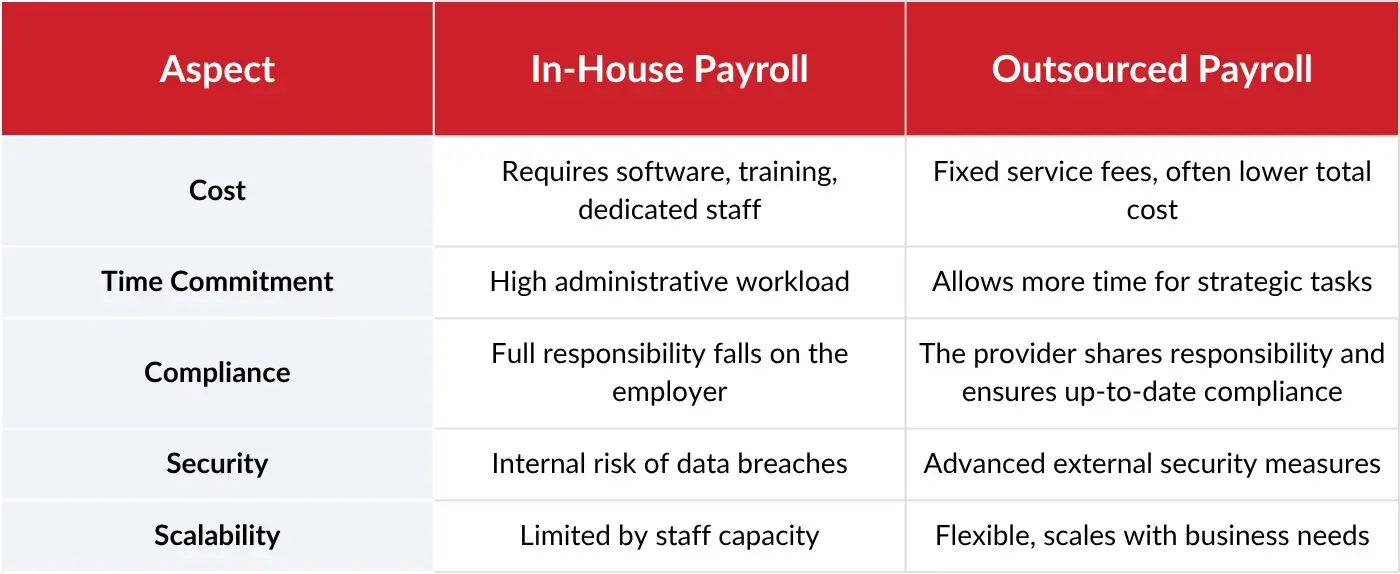
In-House Payroll vs Outsourced Payroll

Choosing between managing payroll internally and engaging a specialist provider is a decision that affects costs, compliance, and operational efficiency. For small businesses weighing the two options, it is crucial to understand how they differ in practice.

The following table provides a clear overview of the key distinctions, helping you evaluate which approach best aligns with your company’s resources, risk appetite, and growth ambitions. 

Comparison of in-house vs outsourced payroll.

Conclusion

For many small businesses, outsourcing payroll is not simply an operational convenience – it is a strategic move that enhances accuracy, compliance, and financial predictability in a complex regulatory environment. By entrusting payroll to experienced professionals, companies minimise legal risks, protect sensitive data, and unlock time to focus on growth and customer value.

However, the benefits depend greatly on partnering with a provider who understands your industry, region, and workforce needs. The right partner brings secure technology, regulatory expertise, and tailored solutions that scale with your ambitions.

For businesses seeking reliable payroll solutions in Singapore, Hong Kong, and Asia-Pacific, Galaxy Group combines local insight with global best practices to ensure your payroll is managed accurately and securely, giving you complete peace of mind to focus on what matters most: your success.

Switch to Stress-Free Payroll Solutions

 Contact Galaxy Payroll Group today and discover how our trusted payroll solutions can free your business to focus on what matters most.

FAQ’S

What exactly is payroll outsourcing?

Payroll outsourcing involves engaging an external provider to handle all aspects of employee pay, including wage calculations, statutory deductions, tax filings, and payslip distribution. Unlike general HR outsourcing, this service ensures employees are paid accurately and complies with local laws.

A payroll outsourcing provider typically takes over the routine but complex tasks involved in payroll. This includes gathering employee pay data, processing salaries, calculating taxes and deductions, arranging payments to staff and tax authorities, and preparing detailed reports for the employer. Many providers offer secure online portals so employers can monitor payroll activity anytime.

Businesses can choose from

  • Full-service payroll providers manage the entire payroll cycle and compliance.

  • Professional Employer Organisations (PEOs) handle payroll alongside HR functions such as benefits and risk management.

  • Employer of Record (EOR) services, which legally employ staff on your behalf in overseas markets, ensuring full compliance.

  • Payroll software, which is technically self-managed, automates many payroll calculations.

A qualified payroll partner keeps current with national and regional tax requirements, ensuring accurate calculations, timely tax payments, and correct filing of year-end returns. This dramatically reduces the risk of penalties or audits.

Yes. Reputable providers supply secure online dashboards where you can check payroll records, payment histories, and compliance documents anytime.

Potential risks include sharing sensitive employee data with a third party and losing some internal control over pay processes. However, partnering with a trusted, certified provider with robust data protection measures significantly reduces these concerns.

In many cases, yes. Outsourcing removes the need for specialist payroll staff, expensive software licences, and time-consuming compliance work. For growing businesses, this can deliver substantial savings over time.

Payroll software automates calculations but requires your team to input data, check accuracy, and stay on top of tax rules. By contrast, outsourcing hands the entire process to external experts, providing peace of mind that payroll is run correctly and on time, with minimal effort from your in-house staff.

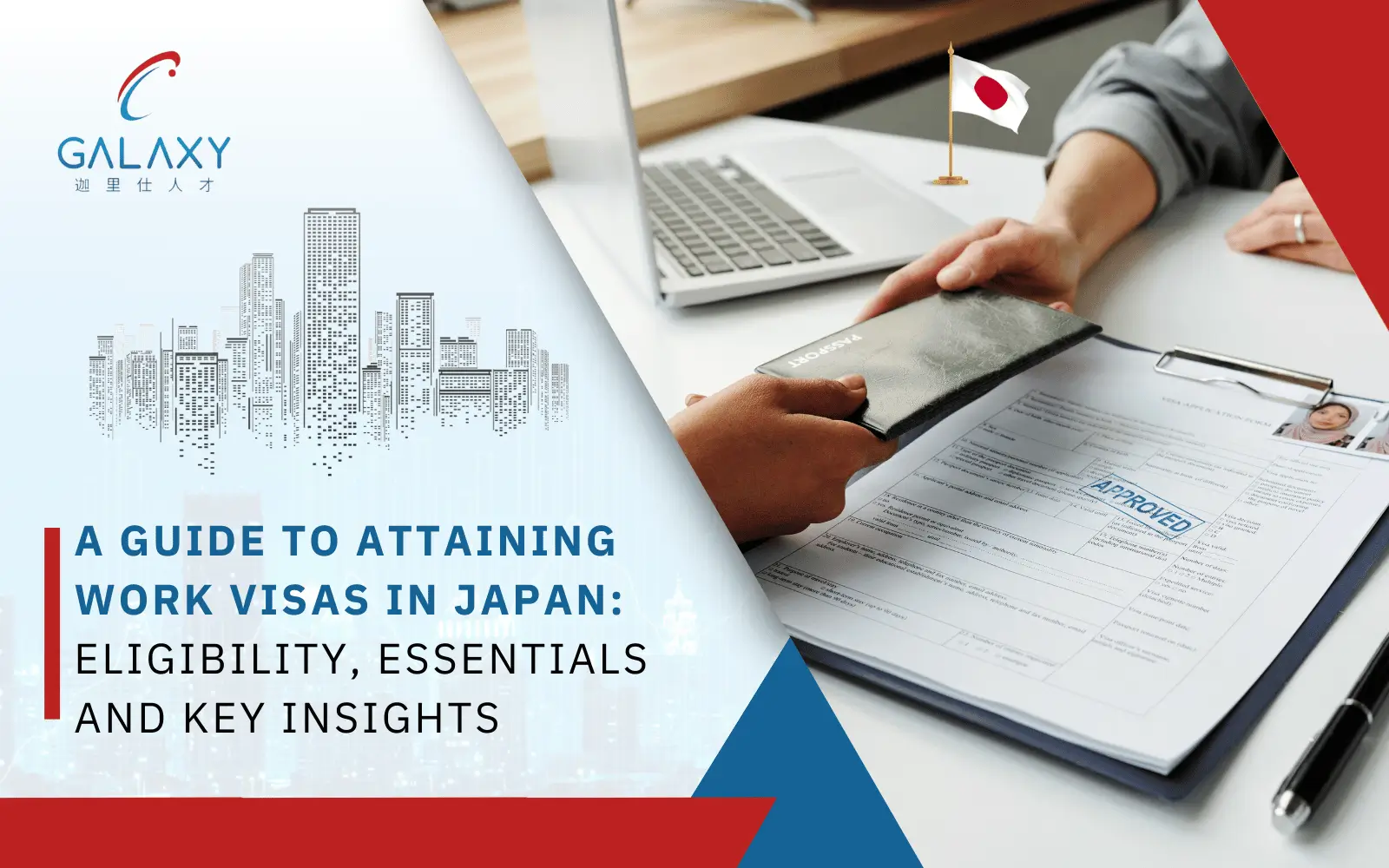
A Guide to Attaining Work Visas in Japan: Eligibility, Essentials and Key Insights

A Guide to Attaining Work Visas in Japan: Eligibility, Essentials and Key Insights

blog- A Guide to Attaining Work Visas in Japan

Japan is an attractive destination for international talent, known for its advanced economy, cutting-edge industries, and unique cultural appeal. However, working in Japan as a foreign national is not possible without complying with the country’s strict immigration and labour regulations. A valid work permit and visa are required by law before engaging in any paid employment.

This guide provides a comprehensive overview of Japan’s work permit requirements, including visa categories, eligibility criteria, application processes, compliance obligations, and how employers can navigate these regulations efficiently.

Why Japan Require Work Permits?

Japan’s approach to immigration is rooted in its economic priorities and demographic landscape. The requirement for work permits exists primarily to protect employment opportunities for Japanese citizens. By mandating foreign nationals to obtain specific work authorisations, the government ensures that only sectors facing genuine skill shortages open up to foreign expertise.

Moreover, Japan faces a significant demographic challenge—an ageing population coupled with a shrinking workforce. In response, the work permit system is pivotal in attracting skilled foreign workers in industries such as healthcare, IT, and engineering. This approach not only addresses labour shortages but also contributes to the country’s economic resilience and innovation efforts.

The permit system also serves as a mechanism to uphold labour standards. It ensures that foreign employees receive fair treatment, including equitable wages, safe working conditions, and access to social benefits, in line with Japanese labour laws. In doing so, it aims to prevent exploitation and maintain the workforce’s integrity.

Who requires a Work Permit or Visa to Work in Japan?

All foreign nationals who are not Japanese citizens or do not hold special residency status are required to obtain a work permit. The following individuals are exempt:

  • Japanese citizens (including those residing abroad)
  • Permanent residents
  • Long-term residents
  • Spouses or children of Japanese nationals or permanent residents

All other individuals must undergo a formal work visa application process supported by a Japanese sponsor (typically the employer).

What are the main types of work visas in Japan?

Japan offers a variety of long-term visa options depending on the nature of employment:

1. Work Visa

This is the most common type of employment across various sectors. The visa duration and conditions depend on the job category.

2. Specified Skills Visa (SSV1 and SSV2)

  • SSV1 is designed for foreign workers in sectors with significant labour shortages, such as nursing, agriculture, and shipbuilding. It is valid for up to five years.

  • SSV2 allows indefinite renewal and family accompaniment, granted to individuals with advanced expertise.

3. Highly Skilled Professional Visa

Issued to candidates with exceptional academic or professional backgrounds, offering a five-year residency and fast-track pathways to permanent residency.

4. Intra-Company Transferee Visa

Granted to employees being relocated from a foreign branch to the Japanese arm of their organisation.

5. Start-up Visa

Encourages entrepreneurial activity and innovation by allowing individuals to launch their business ventures in Japan.

6. General and Specified Visas

These include visas for cultural activities, internships, or research engagements.

What is the Certificate of Eligibility (CoE) and why is it required?

The Certificate of Eligibility (CoE) is a prerequisite document issued by Japan’s Immigration Services Agency. It confirms that the applicant meets the legal conditions for entry and residence based on employment, family ties, or other valid grounds.

The employer (or sponsor) must apply for the CoE on the applicant’s behalf. Once approved—usually within three months—the document must be presented during the visa application process at the relevant Japanese embassy or consulate abroad.

What are the Work Permit Requirements in Japan?

To obtain a work permit in Japan, the first prerequisite is a Certificate of Eligibility (COE). Employers typically apply for the COE on behalf of their hires through the regional immigration bureau.

General Requirements:

  • A valid passport

  • A formal job offer from a Japanese organisation

  • Completed visa application form

  • Recent passport-sized photograph (taken within the last six months)

Depending on the visa type, additional documents, such as skills assessment results or Japanese language proficiency scores, may be required.

How does the Work Visa Application Process Work in Japan?

To obtain a work permit in Japan, the first prerequisite is a Certificate of Eligibility (COE). Employers typically apply for the COE on behalf of their hires through the regional immigration bureau.

The process to secure a work permit in Japan involves the following steps:

  1. Securing a Job Offer: The foreign applicant must first receive an offer of employment from a Japanese employer.

  2. COE Application by Employer: The employer submits a COE application to the local immigration office on the employee’s behalf. This process can take up to three months.

  3. Visa Application: Once the COE is granted (valid for three months), the employee must apply for a work visa at a Japanese consulate or embassy in their home country.

  4. Supporting Documents: These include:
  • Letter of Guarantee

  • Official Invitation Letter

  • Itinerary and purpose of visit

  • List of visa applicants (if applicable)

  • Company profile and contact information

For the Specified Skilled Worker visa, applicants must submit a skill evaluation scoring 70 points or more.

What are the Japan Work Visa Requirements for Employees and Employers?

A. Japan Work Visa Requirements for Employees:

  • A valid passport
  • A completed visa application form
  • Recent passport-sized photographs
  • Certificate of Eligibility (CoE)
  • Proof of job offer and employment contract
  • Relevant academic or professional credentials
  • A points-based assessment (for certain skilled categories).

B. Japan Work Visa Requirements for Employers:

  • Letter of guarantee
  • Official invitation letter
  • Business registration documents
  • Visa applicant list and job descriptions
  • Detailed itinerary for the employee’s stay in Japan

Employers must be diligent in preparing these documents and ensuring accuracy to avoid delays or rejections.

Read our guide : Minimum Wage Trends in 2025 : A Comprehensive Global Overview

What are the work permit fees in Japan?

Visa application fees depend on the type of entry and the applicant’s nationality. The current fee structure is

  • Single-entry visa: ¥3,000 (approx. USD 30)

  • Multiple-entry visa: ¥6,000 (approx. USD 60)

These fees are non-refundable and must be paid at the time of visa application.

Conclusion

Attaining a work visa in Japan requires thorough preparation, accurate documentation, and a solid understanding of immigration procedures. From the initial Certificate of Eligibility to selecting the correct visa type and ensuring employer compliance, each step demands careful attention to detail.

For employers, non-compliance can result in significant legal and financial consequences. For professionals, delays or errors in the visa process can disrupt relocation plans and employment timelines. That’s why engaging with a trusted partner who understands Japan’s regulatory environment is not just helpful—it’s essential.

At Galaxy Group, we simplify international hiring and workforce mobility. With deep expertise across Asia and a robust presence in Japan, we provide end-to-end support for work permits, compliance, and onboarding—so you can focus on growing your business or career without barriers.

Disclaimer: This blog is for informational purposes only and does not constitute any legal advice.

Secure Your Japan Work Visa Seamlessly

Let Galaxy Group handle the complexities of work permits and immigration compliance in Japan, so you can focus on growth—not paperwork.

FAQ’S

How long does it take to obtain a Japanese work visa?

The time taken to process a Japanese work visa typically ranges between 5 and 10 working days, though this may vary depending on the consulate or embassy where the application is submitted.

However, prior to the visa application, the Certificate of Eligibility (CoE) must be issued by the Immigration Services Agency in Japan—a process which can take up to three months to complete.

Yes. In April 2024, Japan introduced a Digital Nomad Visa for remote workers. Eligible individuals must earn at least ¥10 million (approx. USD 65,000) annually and may reside in Japan for up to six months. This visa is not renewable immediately and requires applicants to wait six months before reapplying.

It offers remote professionals a unique opportunity to live and work in Japan without engaging in local employment.

Upon arrival in Japan, immigration authorities will issue a Landing Permit at the port of entry. This permit effectively replaces the visa and serves as official authorisation to enter and begin residing in Japan.

No. All non-residents must hold a valid work visa. Working on a tourist visa is illegal and may result in fines, deportation, or a ban on re-entry.

If you enter the country via major airports such as Narita, Haneda, Kansai, or Chubu, you will typically be issued your Residence Card immediately upon arrival, alongside the Landing Permit.

However, those entering through other ports of entry must visit the municipal office in their local area to apply for a Residence Card.

Additionally, within 14 days of establishing your residence, you are required to register your address at the local ward or municipal office. Your address will then be printed on your Residence Card.

A Re-Entry Permit is necessary if you intend to leave Japan for a period exceeding one year. For shorter absences, a Special Re-Entry Permit can be obtained at the airport prior to departure, allowing re-entry within a one-year period without the need for additional documentation.

Yes. By using an Employer of Record (EOR) like Galaxy Group, your business can hire talent compliantly without needing to establish a legal entity.